Autumn · Nov 5, 2026
Cinnamon-brown November: the metasequoia path along Yangjaecheon (양재천)
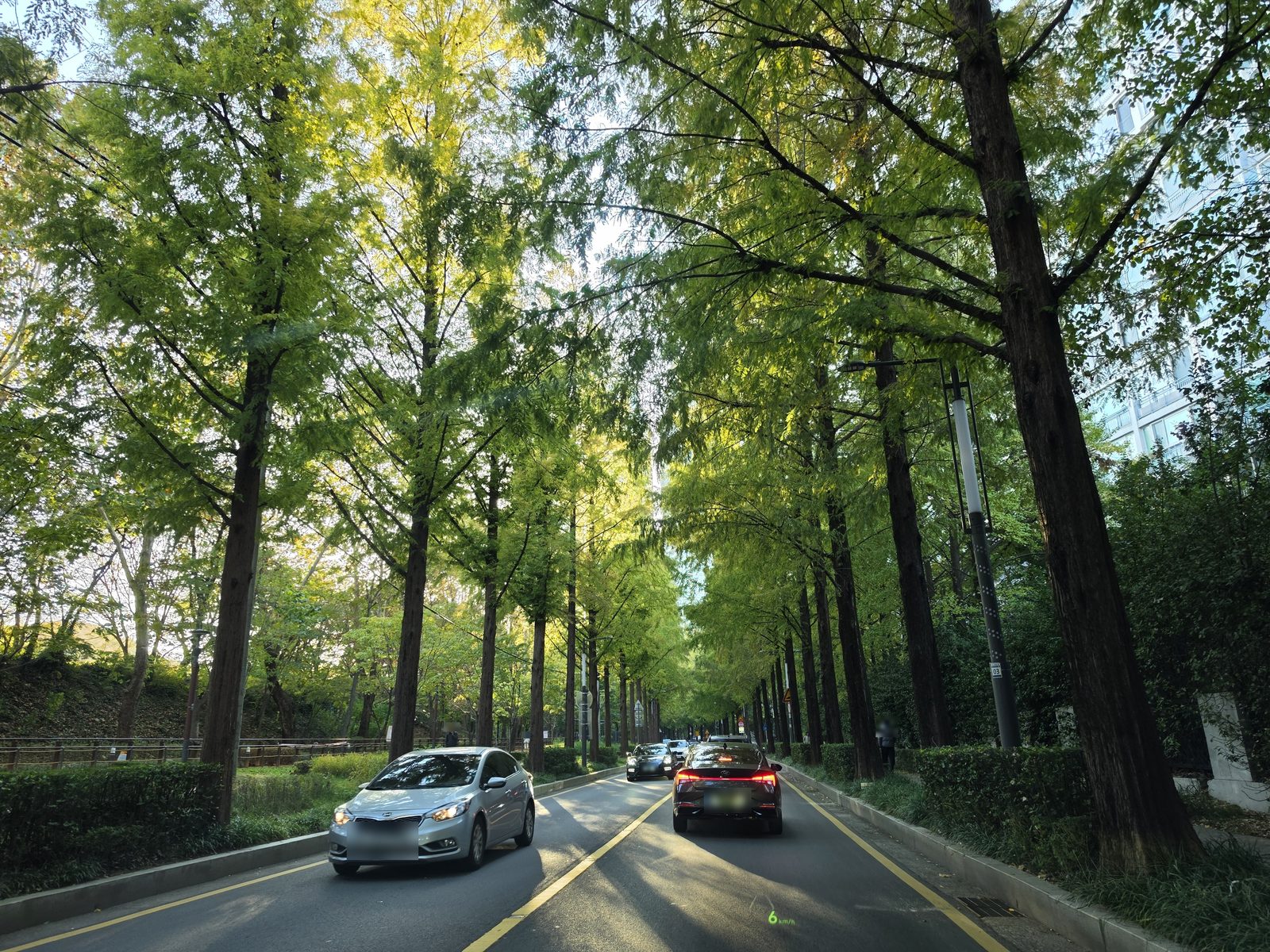
In the middle of Gangnam (강남), between the apartment towers and the after-school academies, there's a 2.9 km double row of metasequoia trees that most visitors never hear about. In November they go from green to a warm cinnamon brown, the stream below fills with ducks, and the people walking under them are mostly locals with dogs, strollers and very serious walking poles.
What it is
The trees line Yangjaecheon-ro (양재천로), the small road on the north bank of the stream, between Yeongdong 2-gyo (영동2교) and Yeongdong 6-gyo (영동6교). Gangnam-gu counts 589 of them. They were planted about 30 years ago as skinny poles that looked faintly ridiculous next to the new apartment blocks. They have since won.
Poor tree health and roots lifting the sidewalk led Gangnam-gu to begin phased work in 2020, completed at the end of October 2022: trees got the outer strip as a green bed, and the walkway moved to the inside (Gangnam-gu’s before-and-after release; Yonhap). The result is a proper footpath with benches, a deck section, and a 600 m barefoot red-clay path (황토길) between Yeongdong 4 and 5 bridges, with a foot-washing station. Koreans will take their shoes off for their health in the middle of Gangnam. Join them or don't; nobody will judge either way, at least not out loud. The sidewalk, at least, has learned to leave the roots alone.
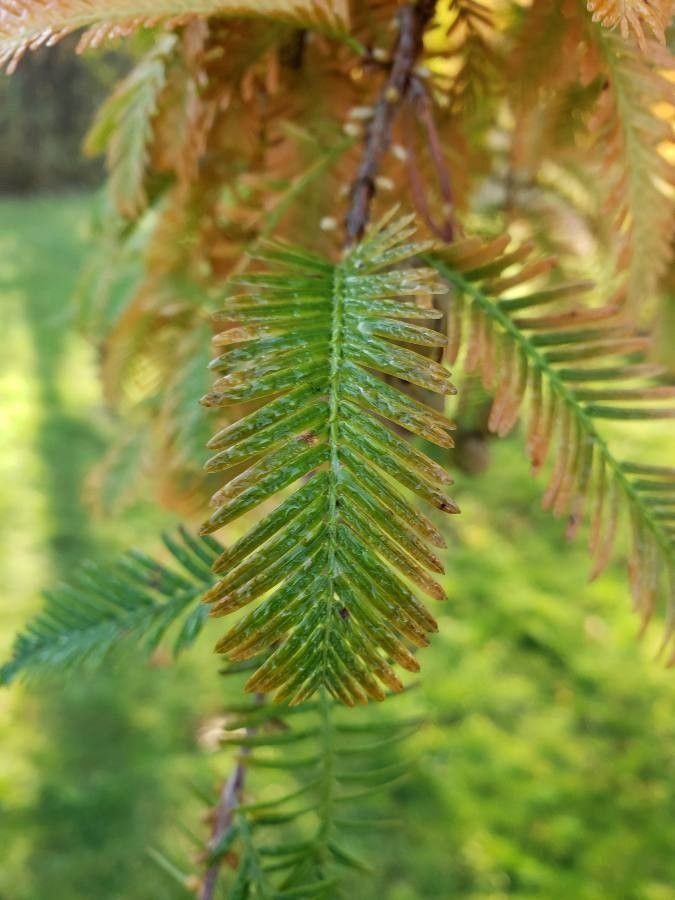
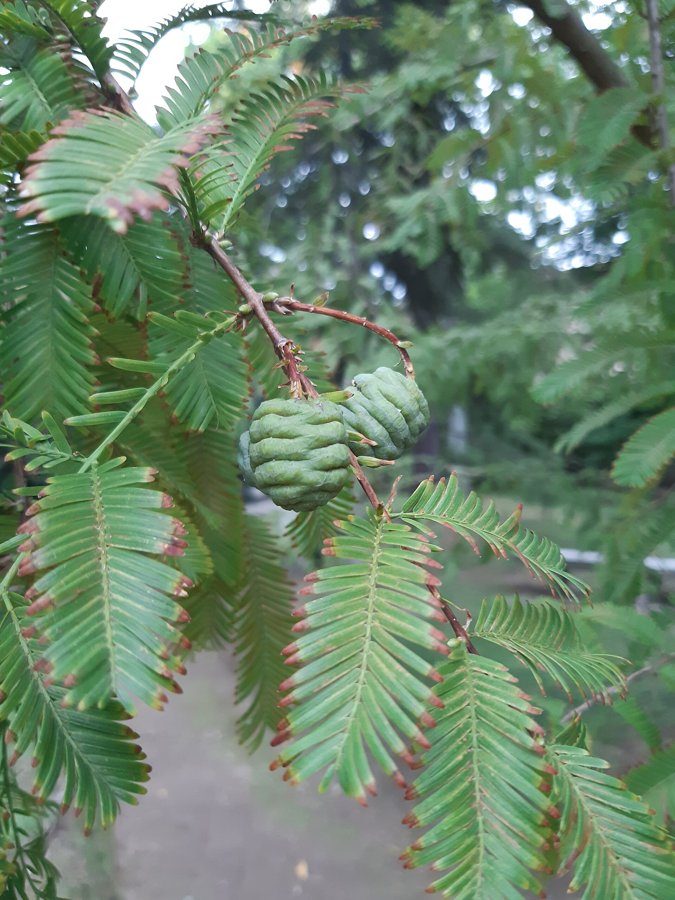
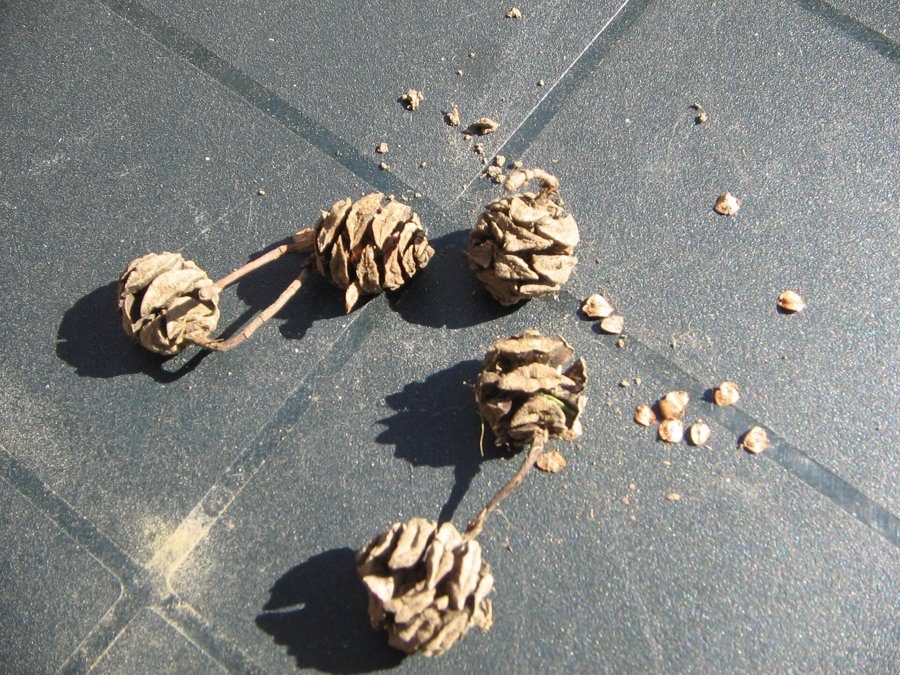
Metasequoia (메타세쿼이아, Metasequoia glyptostroboides), also called dawn redwood, is a deciduous conifer: a conifer that drops its needle-like leaves in autumn. The leaves turn reddish brown before they fall. Its small, round cones look as if they were assembled with a tiny compass: the scales come in opposite pairs, each pair set at right angles to the next. Living trees were found in China in the 1940s, after the genus had been known from fossils. Autumn is when this conifer remembers it is deciduous.
China is the metasequoia’s native home, and it is planted there on a huge scale, including along Pizhou’s 47 km avenue. Korea, Japan, the US and Europe have introduced or planted it: Korea’s first trees arrived via Japan in 1956, and Japan has the Takashima Metasequoia Namiki (Japanese source). Abroad, it grows on New York City sidewalks and as Washington, DC street trees; it was planted at Cambridge in the UK in 1949, and Eindhoven uses it as a street tree (species overview; NYC tree map).
The route
Start at Hakyeoul and walk west, upstream, with the stream on your left. It's one straight line; you can't get lost unless you try.
Google has no walking directions in Korea, so use Naver Map (English mode) for turn-by-turn. Per-stop links stay below.
1. Hakyeoul Station (학여울역), Exit 1 Walk about 5 minutes towards the stream and Daechi Bridge (대치교). The name Hakyeoul means "crane shallows". The cranes have moved on. The ducks stayed. Naver | Kakao | Google
2. Yeongdong 6-gyo (영동6교) to Yeongdong 3-gyo (영동3교) The metasequoia rows start at Yeongdong 6-gyo. Walk up on Yangjaecheon-ro under the trees, or drop down to the lower stream path for willows and the Mallard (청둥오리) crowd. The Korea Tourism Organization singles out the trees between Yeongdong 4 and 3 bridges as the fullest and thickest. The clay path is between bridges 5 and 4. Naver | Kakao | Google
3. Yeongdong 3-gyo (영동3교) to Yeongdong 2-gyo (영동2교): the café stretch Past bridge 3 the trees thin to a single row on the stream side, and the other side of the road fills with cafés, bistros and wine bars, known locally as the Yangjaecheon café street (양재천 카페거리). Get a coffee to go and sit on a bench by the water. It's a good place to be alone without feeling like it. Naver | Kakao | Google
4. Maebong Station (매봉역) From the café street, walk north about 10 minutes to Maebong Station on Line 3. If you still have legs, cross the stepping stones under Yeongdong 2-gyo instead and keep going into Yangjae Citizens' Forest (양재시민의숲), a bigger, stiller park with more metasequoias. Naver | Kakao | Google
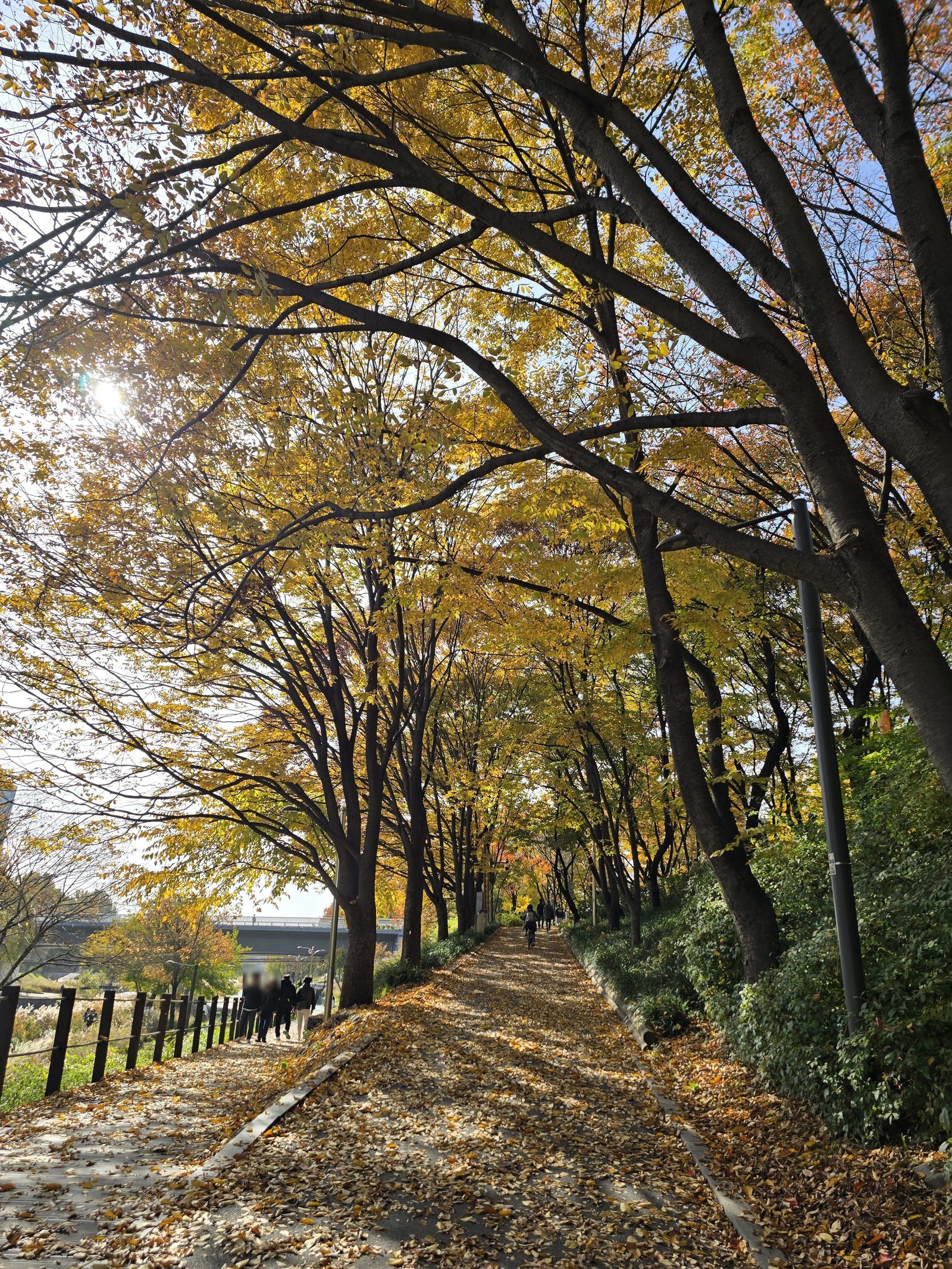
Yangjaecheon has a cherry-tree path inside the embankment, right beside the stream on the lower riverside path, below the metasequoia road. Cherry blossoms (벚꽃) get their own post when spring comes.
When to go
For colour: mid to late November. On 31 October this year the trees were still fully green, and metasequoias turn after the ginkgo and the maples. Once they go, the needles hang on for a while, so this isn't a one-weekend window like the ginkgo trees.
For quiet: there are no tourist crowds here. The people are residents, so busy hours follow Gangnam's daily routine. Seoul Metro's November 2025 exit counts at Maebong and Hakyeoul (Seoul public data) show:
- Weekdays: 10:00–16:00 is the quiet window. After 18:00 Maebong gets about twice the arrivals, and the path fills with after-work walkers and runners.
- Weekends: steady all day with no sharp peak. Sunday morning is the calmest.
Expect a few cyclists on the lower path at any hour. They have their own lane; stay out of it.
Another well-known option is World Cup Park’s Metasequoia Road (메타세쿼이아길) in Mapo, a roughly 1 km flat dirt path along the south foot of Haneul Park (하늘공원), beside Gangbyeon Expressway. Planted around 1999, when the former Nanjido landfill became World Cup Park, it is stroller and wheelchair friendly. From Line 6 World Cup Stadium Station (월드컵경기장역) Exit 1, approach via Pyeonghwa Park. Unlike Yangjaecheon’s street avenue with cafés, this is a park path, with traffic noise supplied by the expressway. See Seoul's theme-walk page.
For a quieter setting, try Ansan Jarak-gil’s metasequoia grove in Seodaemun, on a forested hillside away from roads. The 7 km Ansan mountain loop is mostly wooden deck, and metasequoias line both sides of one section. From the entrance near Seodaemun Museum of Natural History, it is a gentle 15-minute climb. Line 3 serves Dongnimmun, Muakjae, and Hongje, though walks from them are steep. See Visit Seoul's page.
Getting there and back
- Subway: Line 3 (3호선) runs straight here from central Seoul. From Chungmuro (충무로) to Maebong is 12 stops, about 25 minutes.
- Taxi: from Gangnam Station (강남역) or anywhere in Gangnam it's a short ride. Kakao T (카카오 T) takes foreign cards registered in your own name, and Uber works in Seoul too. Set the pickup or drop-off to 영동3교 and you land in the middle of the best stretch.
- Bus: Visit Korea lists buses 141, 640 and 9414 for the area. With Line 3 at both ends, you won't need them.
If walking 3 km under trees in Seoul sounds good, the silver grass walks near Seoul are the hillier version.