Autumn · Nov 5, 2026
Butter yellow, slightly stinky: Seoul's ginkgo trees (은행나무), explained
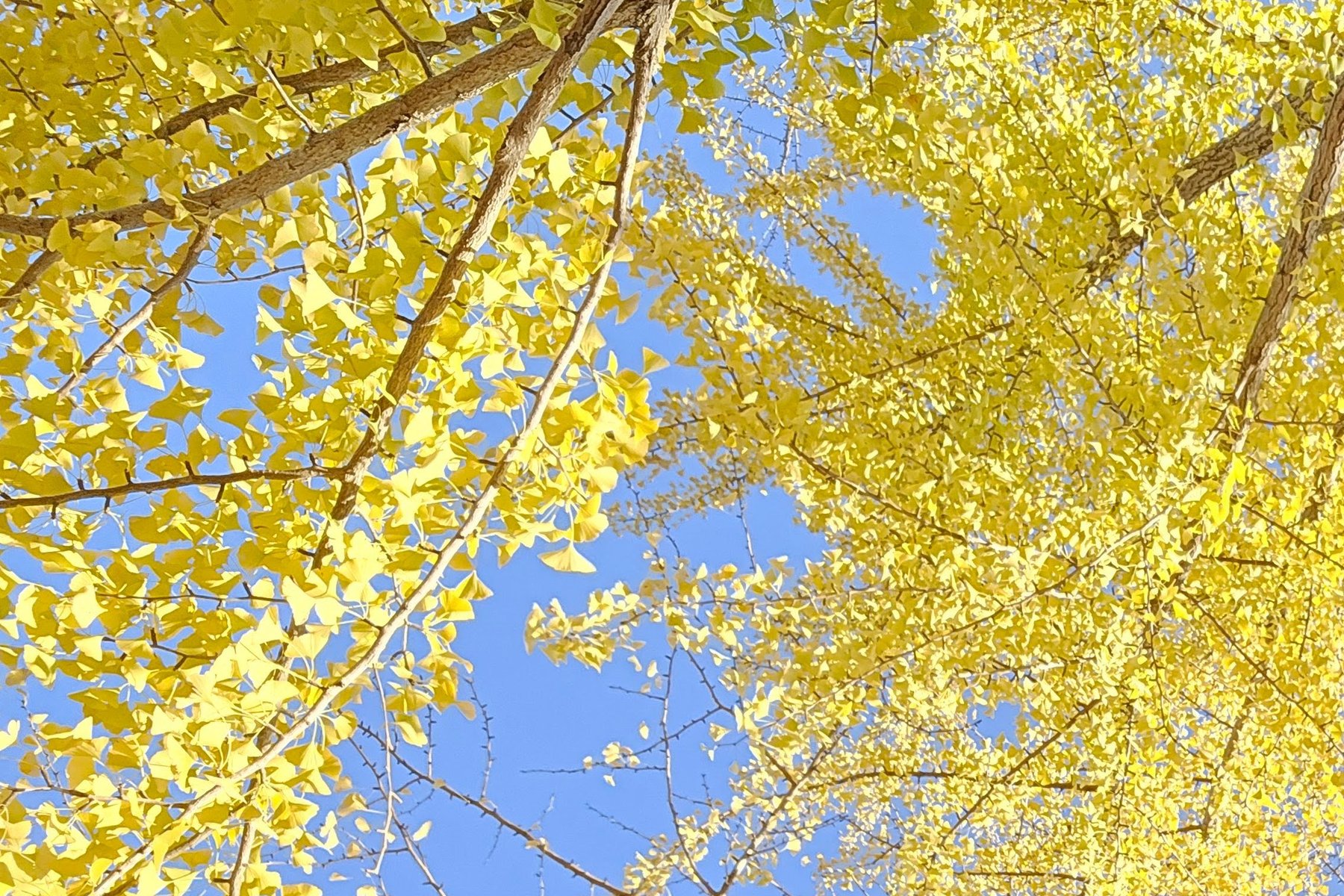
In Seoul (서울), autumn arrives in two colours: bright yellow above your head, and a less poetic colour on the sole of your shoe.
Both come from the ginkgo (은행나무, Ginkgo biloba L.). The city has 99,049 of them along its streets, 24,811 of them female by the city's 2026 count, the ones that drop seeds. That is why it also has nets, collection crews, vibrating harvesters and a running argument about whether a beautiful tree should be allowed to behave like a tree.
Why it turns that yellow
The yellow was there all summer. Leaves carry yellow pigments called carotenoids, but green chlorophyll drowns them out. In autumn the tree breaks its chlorophyll down, and the yellow is what's left. Maples go on to make new red pigment; ginkgo stops at yellow. That's why you get that clean, flat butter yellow instead of orange.
Why Seoul is full of them
Ginkgo is tough, handles city air and puts on a big autumn show, so Seoul planted it everywhere, and made it the city tree in 1971. According to Seoul's street-tree data, as of 2026, 99,049 of the city's 280,388 street trees are ginkgo, about 35%. That's enough yellow to make the city look as if someone applied a cheerful filter. It's also enough female trees to create a seasonal logistics problem. The leaves are not the issue. The seeds are.
Ginkgo trees are either male or female, and only females make seeds (은행). The catch: you can't tell which a tree is until it starts producing seeds, usually 15 to 30 years after planting. For decades nobody could pick, so streets were planted with both. In 2011 the National Institute of Forest Science (국립산림과학원) developed Korea's first DNA test for ginkgo sex: a fingernail-sized leaf from a one-year-old sapling is enough to tell male from female before it goes into the ground. It was patented in Korea in 2014 and in China in 2015, and new street ginkgo can now be all male.
Seoul isn't alone. Ginkgo has been Tokyo's official tree since 1966, chosen by public vote, and Tokyo's leaf-shaped logo nods to it. It is the most planted tree along Tokyo's metropolitan roads, where the city recommends male trees for exactly the reason you'd guess. In China, where the tree comes from, Chengdu (成都) made ginkgo its city tree in 1983 and lines its roads with it. And in all three countries, people eat the seeds.
Where the smell comes from
Each seed sits inside a soft, apricot-coloured outer coat. As it ripens and breaks down, it releases butyric acid and hexanoic acid, the same family of compounds behind rancid butter and strong cheese. Damaged seeds give off far more than whole ones. So it isn't really the tree that stinks. It's the pavement after a few thousand commuters.
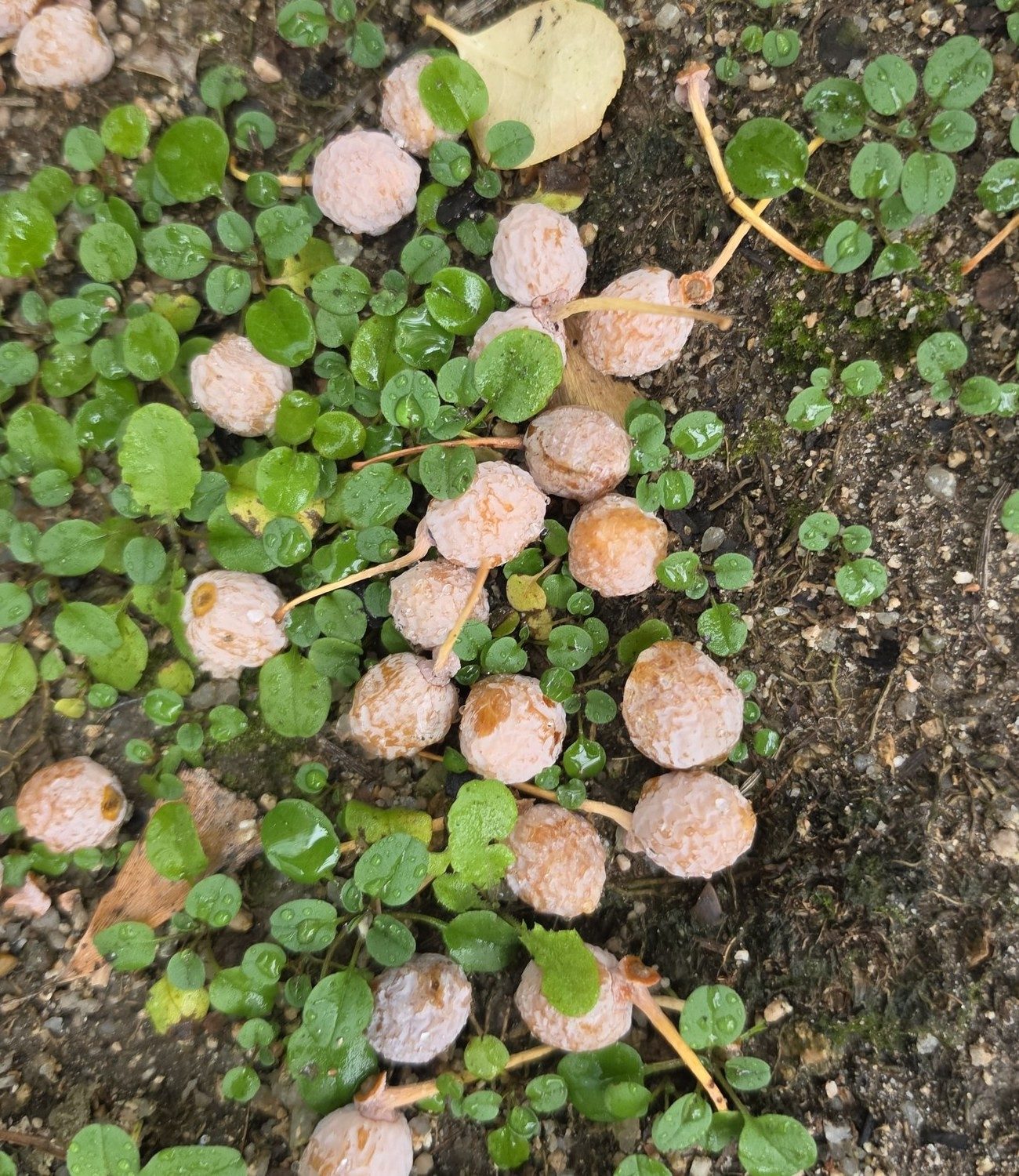
The same coat contains ginkgolic acids, which can cause an itchy rash in some people, closely related to the reaction to poison ivy. Admire the leaves, leave the seeds on the ground, and if you step in one, scrape your sole before you get on the subway. The smell lingers for a long time. You'll get back to your room, kick off your shoes by the door, catch a whiff an hour later and briefly wonder whether you had an accident. You didn't. Check the shoes.
Can you eat them?
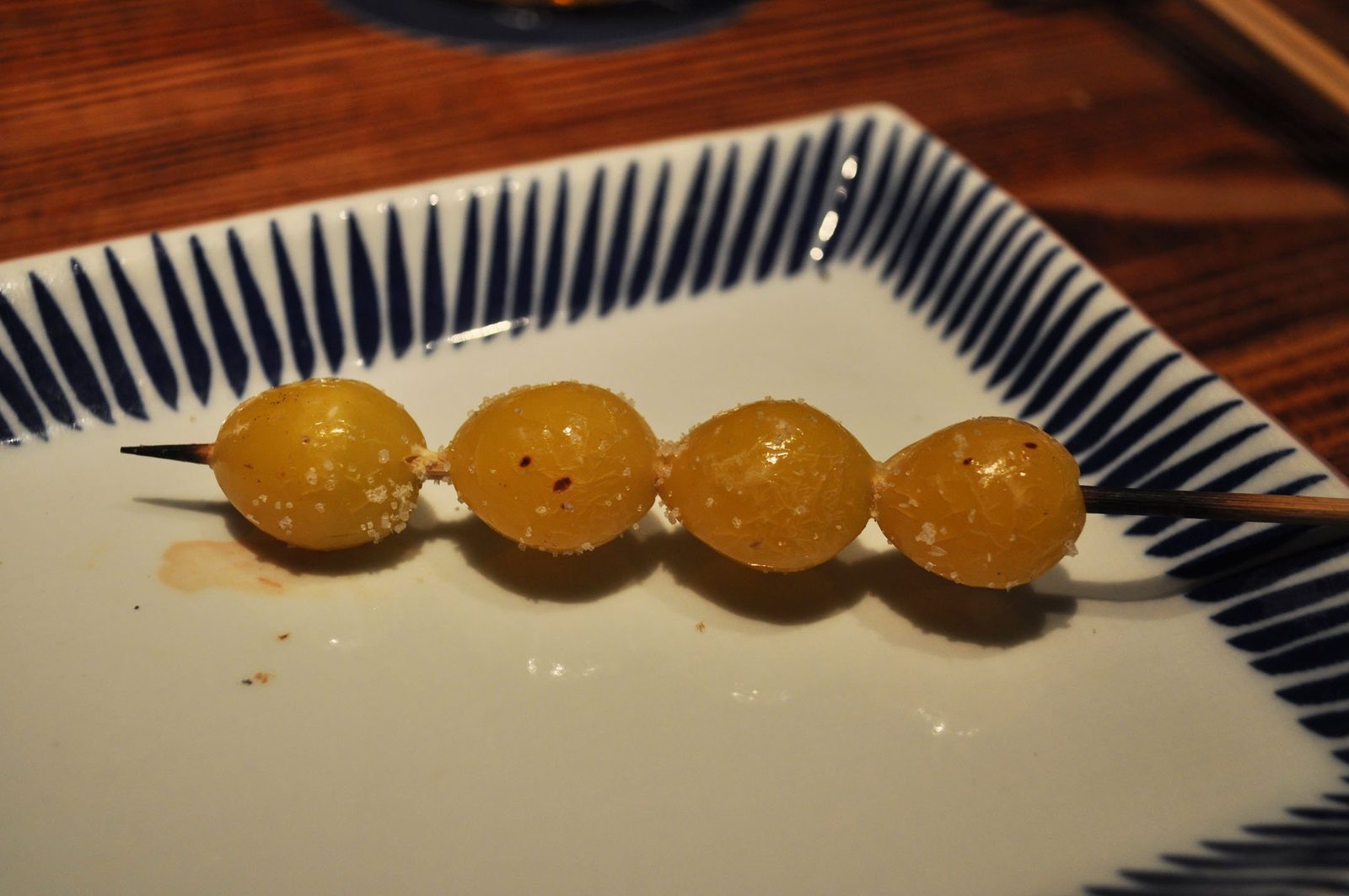
Yes, and Koreans do: roasted with a pinch of salt as a snack or a drinking side, threaded on skewers, or cooked into rice. But "edible" doesn't mean "keep going until the bowl is empty." The seeds contain two toxins. One is destroyed by cooking, which is why you never eat them raw. The other, methylpyridoxine (ginkgotoxin), survives heat, and in large amounts it can cause loss of consciousness or seizures. Ginkgotoxin (4'-O-methylpyridoxine) looks enough like vitamin B6 to get in its way, and the brain needs B6 to make GABA, the chemical that calms nerve signals. Less GABA, more chance of convulsions, which is why doctors treat ginkgo poisoning with vitamin B6. Children are hit harder. Korea's food safety ministry (식약처) advises fewer than 10 a day for an adult and 2–3 for a child.
If you are wondering where to taste them, you can find them in some of the Korean pubs - just look for ‘은행’ on the menu. It has a nutty flavor and soft chewy texture, and it is great with a glass of beer! I always order a dish when I see one.
In the past, moms and grandmas would go out and collect the fruits, leave them for a couple of days until the flesh became soft. Then they would wear rubber gloves for the messy part: they would squeeze off the soft, smelly flesh, rinse the pale shells until the water runs clear, and let them dry. Then they crack the shells with pliers or the back of a knife, or put a handful in a paper milk carton and microwave it for about a minute until the shells split. Last, the nuts go into a pan with a little oil or salt, and the thin brown skin rubs off while they're warm.
But now, of course, you can pass all the hard part, and simply buy the already-peeled seeds for ₩8,500 for 250 grams from Coupang or Naver Shopping (and 1/10 of the price for China imported) - simply roast them on a pan or put in when cooking rice or chicken soup (백숙). Just don’t go crazy when eating them - it’s hard to stop once you start eating them.
But don't make a souvenir of the ones on the pavement. They're dirty, they're not yours, and peeling them bare-handed is how you get the rash. If you want to try ginkgo, buy them roasted or shelled at a market.
Korea also sells ginkgo leaf extract as a memory pill — Ginexin (기넥신) has been around since 1992. A big US trial found it didn't prevent dementia. Still sells, though.
What Seoul does about it
From 2023, Seoul's districts swapped out more than 15,000 female street trees for males in total, mostly big trees too large to net or shake efficiently. In 2026 that hit a wall. An environmental group counted at least 792 ginkgo trees due to be removed this year and argued that complaints are not a reason to fell an old tree. The city scaled the plan back.
For 2026, Seoul says it will mostly manage the seeds instead: nets around trunks, and vibrating harvesters, some mounted on excavators, that shake the seeds down before they fall on their own. Replacement is limited to trees tangled in power lines, trees graded unsafe, and busy spots such as bus stops and school routes.
So if you see a small excavator hugging a street tree in October, that's municipal policy, not a fight. The solution is never just "fewer ginkgo." It's a small autumn industry with nets, machinery and a team that arrives before the seeds become everyone's problem.
When to go
The Forest Service's 2026 forecast gave ginkgo a national peak of October 30, measured at forest and arboretum sites. For the city itself, Seoul's 2025 foliage guide put the downtown peak between late October and mid-November. If the tree outside your window is gold, go now.
For somewhere quieter than the famous ginkgo avenues, pick one great tree on a weekday morning. Our Myeongnyundang ginkgo (명륜당 은행나무) post has timing from Seoul city data and Google Maps visitor patterns. Both trees there are male, so no smell, and the story goes that the bigger one was planted in 1519.
Peak yellow is lovely, but the better moment comes a little after, when the leaves start to let go. Stand under a ginkgo on a breezy day and look straight up into a slow rain of yellow. It doesn't need to be a famous tree or a huge one. Any street ginkgo will do, as long as you stop walking for a minute.
Seoul isn't choosing between ginkgo and no ginkgo. It's keeping the colour and managing the rest, and the streets can be beautiful and unpleasant within the same ten steps. Complain, then look up.
Official info
Korea Forest Service 2026 foliage forecast (산림청) · Seoul Open Data (서울 열린데이터광장) · National Species List (국가생물종지식정보시스템)