Health · Nov 3, 2026
A cold or flu in Seoul (서울): follow the local routine, step by step
Koreans see a doctor about 18 times a year, against an OECD average of 6.5. They are not three times sicker than everyone else. The clinic is just close, quick and cheap enough that a sore throat counts.
So when a Seoulite catches a cold, the plan is not soup and a duvet (well, we do have our own thing, such as 고춧가루 콩나물국, principle is to sweat it out, which i think is universal regardless of where you are from). It is ten minutes at the clinic on the second floor, five at the pharmacy on the ground floor, and back to work. You can do the same, at a higher price.
The clinic (의원)
Look for a sign ending in 의원 (clinic) with one of these in front: 내과 (internal medicine), 이비인후과 (ear, nose and throat) or 가정의학과 (family medicine). With a blocked nose or a sore throat, plenty of Koreans go straight to the ENT.
At reception (접수), hand over your passport and settle two things first:
- "한국 건강보험 없어요." I don't have Korean health insurance.
- "진료비 얼마예요?" How much is the visit?
- "진료랑 처방만 해 주세요." Just the exam and a prescription, please.
The third line matters. Some clinics offer extras with a cold: a vitamin or "recovery" IV drip (수액), injections, nose treatments. Drips are not covered by national insurance and run from ₩40,000 to a little over ₩100,000. If you want one, fine (it does wonders when you need them). If you came for a prescription, say so before anything starts.
The first-visit fee is ₩18,840 this year, rising to ₩21,210 in January 2027. An insured local pays 30%, about ₩5,600. The national fee schedule does not bind a clinic when the patient is outside the national insurance, so you pay the full bill at the clinic's own rate. Evenings, Saturdays and public holidays add a surcharge.
The consultation is short. Korean clinics run on volume, and the doctor will be typing the prescription while listening to your chest.
If it is the flu
This season started early: the disease agency issued its flu advisory on September 11. If the clinic suspects flu, the options are:
- a rapid flu test (national median ₩30,000)
- antiviral tablets (oseltamivir, sold as Tamiflu (타미플루)), prescription-only, taken for several days
- a single IV dose of the antiviral peramivir (페라미플루), not covered by insurance, ₩70,000–150,000
The IV is the expensive option, but it is one sitting instead of a course of pills, and some of my friends swear by its prompt effect (we are always 빨리빨리). With a flight or three more days of walking ahead, some people decide it is worth it.
Receipts and insurance
Ask for the receipt (영수증) and an itemized bill (진료비 세부내역서) on the way out. An English medical certificate (영문 진단서) costs extra, a national median of ₩20,000, which for a cold can be as much as you would claim. Check what your travel insurer accepts before you pay for one, and skip it for small bills.
The pharmacy next door (약국)
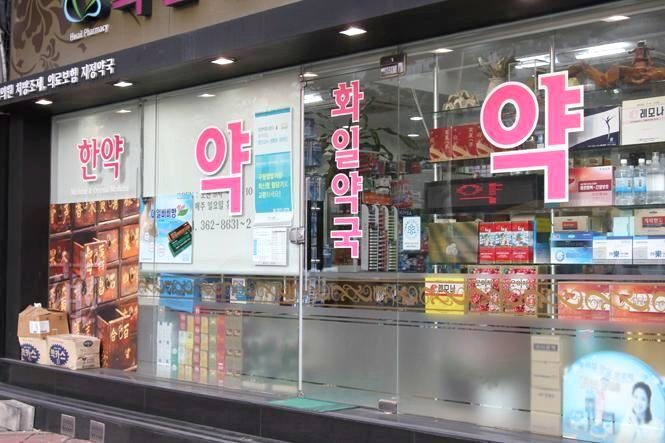
Since July 2000, Korean doctors prescribe and pharmacists dispense, and the two are kept apart (의약분업, the separation of prescribing and dispensing). You can take the prescription to any pharmacy, which is why a building with a clinic upstairs usually has one at street level.
The pharmacist fills it in a few minutes, usually as a strip of paper sachets, one per dose, with the times printed on the bag. Locals pay 30%; you pay all of it, with its own night and holiday surcharge.
Antibiotics and everything else on the prescription-only list (전문의약품) stay behind the counter. Selling them without a prescription is a criminal offense here, so asking nicely will not help.
Or skip the doctor
Plenty of Koreans skip step one. Sales data from 418 pharmacies for March 2026 shows what they buy most, by sales value:
- Gas Hwalmyeongsu (까스활명수), a fizzy herbal digestive tonic for after a big dinner. To be honest, I always just considered it a fizzy dessert rather than real medicine.
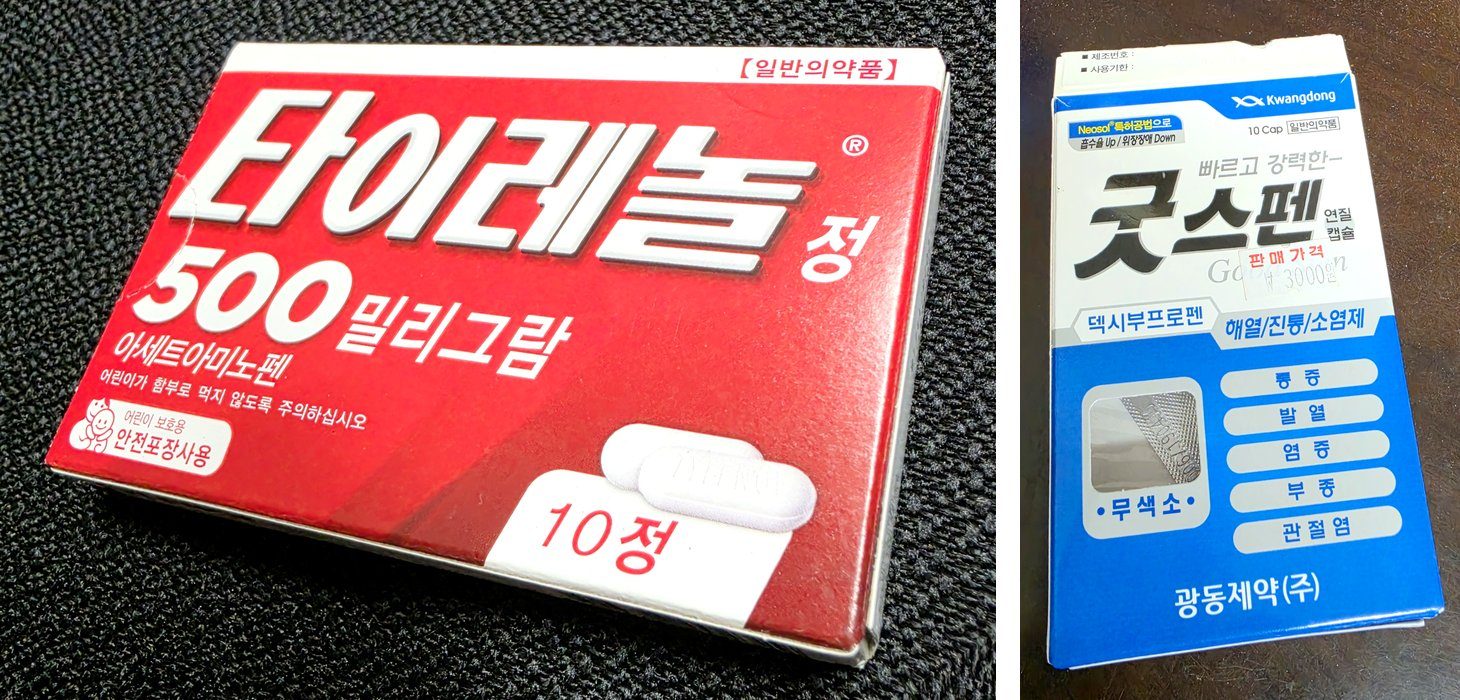
- Tylenol 500 mg (타이레놀). The 10-tablet box sold more units than anything else on the list.
- Pancol S (판콜에스), cold medicine in small 30 ml bottles that you drink
- Panpyrin Q (판피린큐), its rival in a bottle
- Ketotop (케토톱), a pain-relief patch (파스)
Foreign visitors shop differently: in one payment app's reviews, 72% of visitors who said why they went to a pharmacy were after skincare or supplements. The cold shelf has no queue.
A few things the top five does not tell you:
- Pills travel better than bottles. Combination cold tablets such as Tylenol Cold-S (타이레놀콜드에스정) and Panpyrin T (판피린티정) fit in a pocket.
- Real indigestion or diarrhea needs a real medicine. Ask for a digestive (소화제), or for diarrhea a remedy such as Jeongrohwan (정로환).
- A cheaper brand with the same ingredient is the same drug. If the pharmacist offers one, take it.
- The extras are optional. Small herbal sachets or tonic drinks added to your cold medicine are an add-on you did not ask for. "그건 괜찮아요" (I'm fine without that) works.
Brand names change at the border; ingredients don't. Ask by ingredient. The comparison table at the end matches common brands from the US, UK, Germany, France, Japan and Australia to what a Korean pharmacy stocks.
One warning: Pancol S, Panpyrin T and Tylenol Cold-S all contain acetaminophen (paracetamol), the same drug as Tylenol, and so do Theraflu, Lemsip and Grippostad C. Stacking them is an easy way past the 4,000 mg daily limit. Show the pharmacist what you are already taking. Each pharmacy sets its own prices, so the ones in the box above are one shop's.
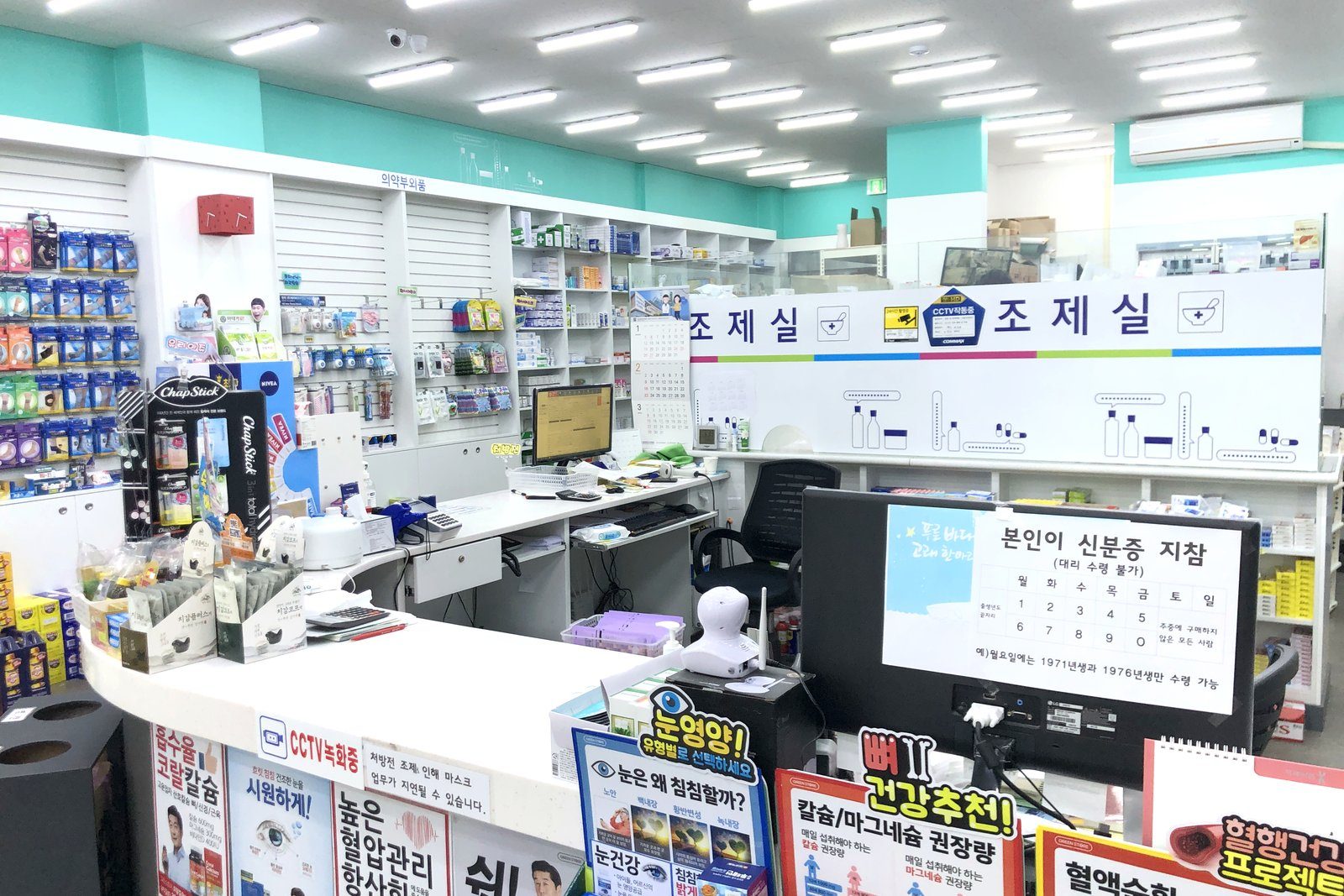
At the counter:
- "감기약 주세요." Cold medicine, please.
- "목이 아파요." My throat hurts.
- "콧물이 나요." I have a runny nose.
- "기침이 나요." I have a cough.
- "열이 나요." I have a fever.
When everything is shut
Convenience stores sell a short list of "safety household medicines" (안전상비의약품) 24 hours a day. Thirteen are designated, but two children's Tylenol tablets are out of production, so 11 are on the shelf: Tylenol 500 mg, two children's fever syrups, Pancol A (판콜에이) and Panpyrin T for colds, four digestives and two patches. One pack per purchase, none to under-12s. The government promised 20 by the end of this year; as of October it had not picked one.
After 10 p.m., Seoul has about 40 public late-night pharmacies (공공심야약국), open until 1 a.m. Search 약국 on Naver Map (네이버 지도), or use E-Gen (응급의료포털), the national emergency portal, which maps open clinics, pharmacies and emergency rooms by date and hour and has an English version. Call first; hours change. For children, 156 Moonlight Children's Hospitals (달빛어린이병원) see patients on evenings and holidays.
Not the emergency room
Do not take a cold to a big hospital ER. Since September 2024, insured patients with mild or non-urgent problems at the larger emergency centers (권역·지역응급의료센터) pay 90% of the bill, up from 50–60%, to send them elsewhere. An emergency management fee (응급의료관리료) comes on top. You pay all of it either way, and you join a crowd: in early 2026, about 40% of ER patients were still mild or non-urgent.
For real emergencies, such as trouble breathing or chest pain, call 119. The ambulance is free. For interpretation, 1330, the travel hotline of the Korea Tourism Organization (한국관광공사), can join a three-way call; 1339, the disease agency's 24-hour line (질병관리청 콜센터), connects foreign callers through it.
One habit to copy, one to skip
Koreans with a cough wear a mask on the subway. It is manners, and the Korea Disease Control and Prevention Agency (질병관리청) asks everyone with respiratory symptoms to do it. Copy that.
Skip the sleep. Koreans average 6 hours 50 minutes a night, 1 hour 32 minutes less than the OECD average. With a cold, go to bed early. It is the one remedy with no surcharge.
General information, not medical advice. If something feels serious, skip the clinic and call 119.
Read next
- Next in this series: flu shots, shingles and other vaccines in Korea as a visitor (coming soon)
- The Myeongnyundang ginkgo (명륜당 은행나무) at Sungkyunkwan University (성균관대학교)
- Bukhansan (북한산) fall foliage: an easy walk from Hwagyesa Temple (화계사) to the Cloud Observatory (구름전망대)
- Quando Vadis: Korea, minus the crowd
Supplementary: your medicine from home, in Korea
Acetaminophen and paracetamol are the same drug; Korean boxes say 아세트아미노펜. Each product links to its official label or the Korean drug regulator's (식약처) listing. "OTC" means a pharmacist can sell it without a prescription.
| For | You may know | Ingredient | In a Korean pharmacy |
|---|---|---|---|
| Fever, pain | Tylenol (US), Panadol (UK, AU), Doliprane, Efferalgan (FR) | acetaminophen / paracetamol (아세트아미노펜) | 타이레놀 500 mg or 세토펜 325 mg, OTC |
| Pain, swelling | Advil (US), Nurofen (UK, AU), Dolormin extra (DE) | ibuprofen (이부프로펜) | Korea's own 애드빌, 이지엔6애니 or 부루펜, 200 mg, OTC. 캐롤에프 is ibuprofen arginine, 200 mg of ibuprofen a tablet, OTC. Also OTC: dexibuprofen (덱시부프로펜), e.g. 굿스펜, 300 mg a capsule |
| Pain | Aleve (US) | naproxen (나프록센) | 탁센, 250 mg a capsule, OTC |
| Pain | Loxonin S (ロキソニンS) (JP) | loxoprofen (록소프로펜) | Prescription only |
| Pain | EVE (イブ) (JP) | ibuprofen with a sedative and caffeine; EVE Three Shot Premium (イブスリーショットプレミアム) adds acetaminophen | No match. Plain ibuprofen is above |
| Cold and flu, all-in-one | Theraflu, DayQuil (US), Lemsip, Beechams (UK), Grippostad C (DE) | acetaminophen plus a decongestant, antihistamine or cough suppressant, depending on the product | Korea's own Theraflu sachets, 타이레놀콜드-에스, 판피린티, OTC. All contain acetaminophen |
| Blocked nose | Sudafed (US) | pseudoephedrine (슈도에페드린) | On its own, prescription only. OTC only inside combinations such as 타이레놀콜드-에스 (30 mg) |
| Blocked nose with pain | Aspirin Complex (DE) | aspirin + pseudoephedrine | No match. Plain 바이엘아스피린 500 mg is OTC |
| Blocked nose, spray | Otrivin (UK, EU), Afrin (US) | xylometazoline (자일로메타졸린); Afrin is oxymetazoline (옥시메타졸린) | 오트리빈 멘톨 0.1% (xylometazoline) or 오트리빈에스 (oxymetazoline 0.05%), both for ages 12 and up, OTC. The 0.05% xylometazoline spray is for children 2 to 11. The Korean labels say not to use them for 7 days or more in a row |
| Cough | Robitussin, Delsym (US) | dextromethorphan (덱스트로메토르판) | 코푸시럽에스, OTC: dextromethorphan with a decongestant (dl-methylephedrine) and chlorpheniramine, an antihistamine that can make you drowsy. Plain 코푸시럽, without 에스, contains dihydrocodeine and is prescription only |
| Phlegm | Mucosolvan (EU) | ambroxol (암브록솔) | 뮤코펙트, 30 mg, OTC |
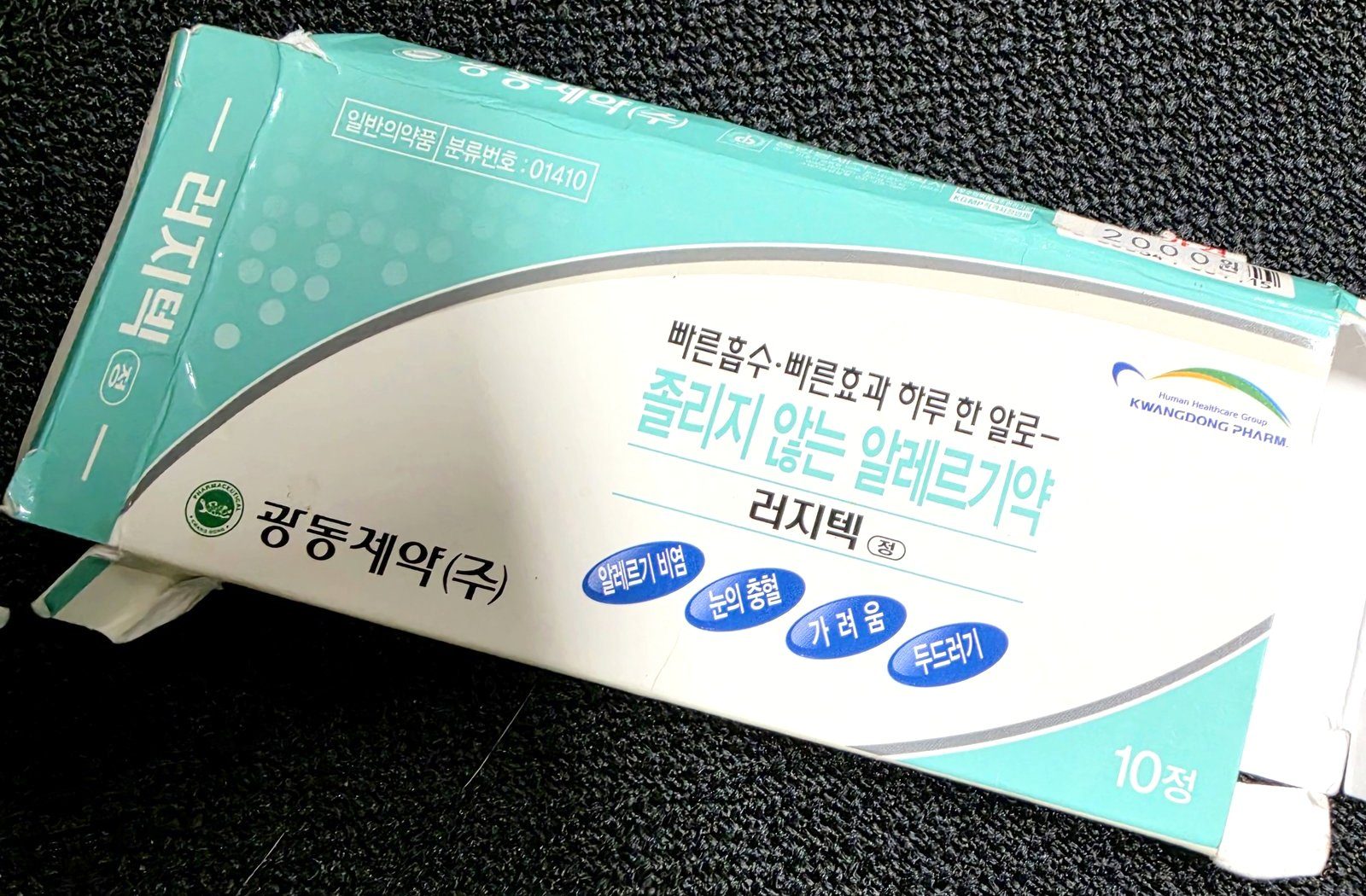
| Allergy | Zyrtec (US) | cetirizine (세티리진) | 지르텍 or 러지텍, 10 mg, OTC |
| Allergy | Claritin (US) | loratadine (로라타딘) | 클라리틴, 10 mg, OTC |
| Allergy | Allegra (US) | fexofenadine (펙소페나딘) | 알레그라 120 mg, OTC. The 180 mg tablet is prescription only |
| Allergy (drowsy) | Benadryl (US) | diphenhydramine (디펜히드라민) | OTC, but sold as a sleep aid, e.g. 단자민정 |
| Upset stomach, diarrhea | Pepto-Bismol (US) | bismuth subsalicylate (비스무트차살리실산염) | 펩토무스 현탁액, same strength (525 mg per 30 ml), OTC |
| Diarrhea | Imodium (US, UK), Gastro-Stop (AU) | loperamide (로페라미드) | 로프민 캡슐, 2 mg, OTC |
| Diarrhea | Smecta (FR) | diosmectite (디옥타헤드랄스멕타이트) | 포타겔 or 스타빅 liquid, OTC |
| Diarrhea | Seirogan (正露丸) (JP) | wood creosote and herbs | 정로환, a cousin: guaiacol, one of creosote's main components, and herbs. OTC |
| Cramps | Spasfon (FR) | phloroglucinol (플로로글루시놀) | Prescription only. 부스코판 (butylscopolamine) is a different OTC antispasmodic |
| Heartburn | Gaviscon Double Action (UK), Tums (US) | alginate and antacids; Tums is calcium carbonate | 개비스콘 더블액션, the same three ingredients as the UK one, calcium carbonate included. OTC |
| Sore throat | Strepsils (UK, AU) | amylmetacresol + dichlorobenzyl alcohol | Korea's 스트렙실 is a different drug: flurbiprofen 8.75 mg, like the UK's Strefen. OTC |