Autumn · Nov 6, 2026
A Beautiful Tree, Real Yellow, and a Lot of Noise.
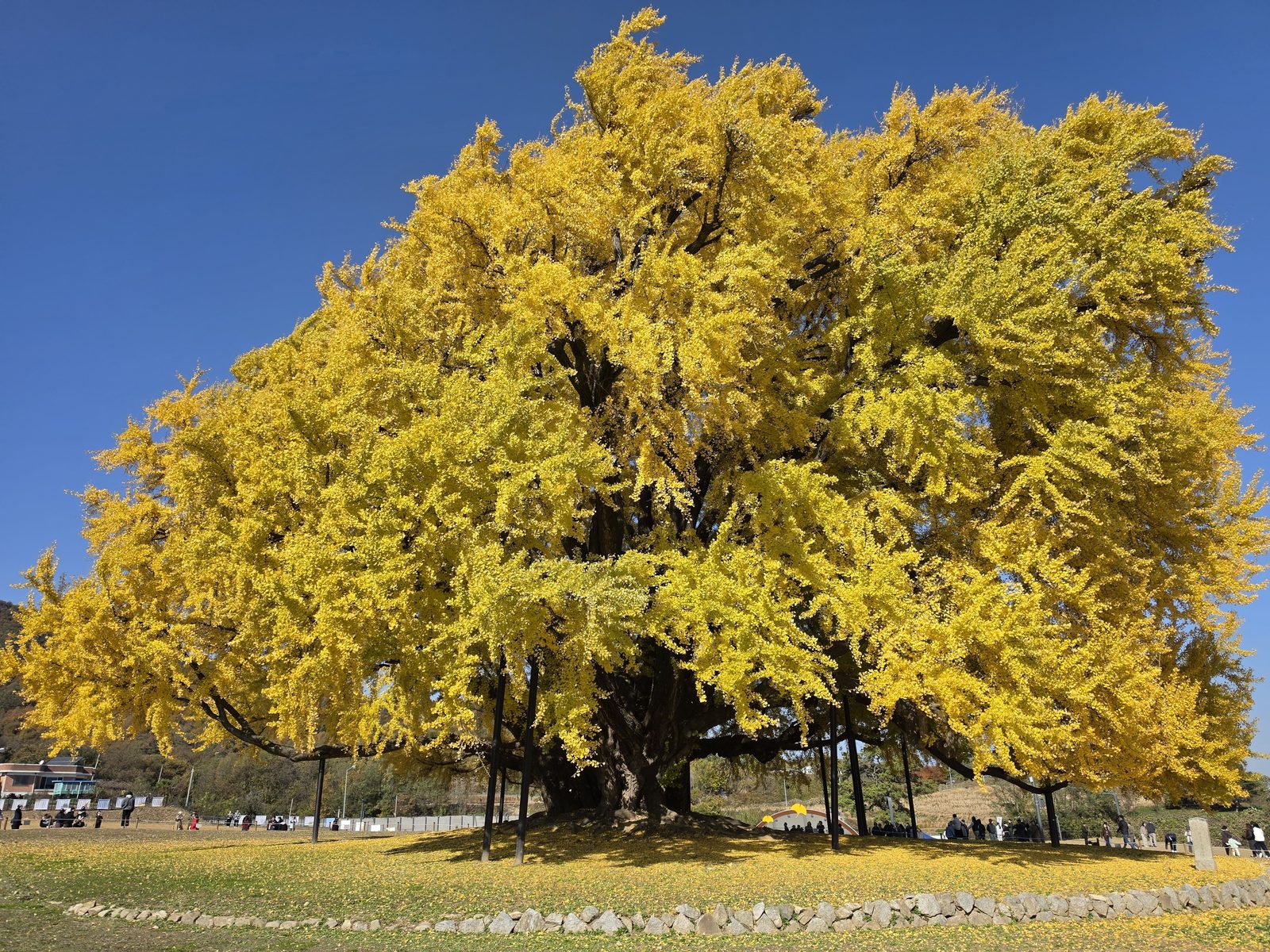
Bangyeri (반계리), Munmak-eup (문막읍), Wonju (원주) — Friday, November 6, 2026. This article describes conditions during that visit.
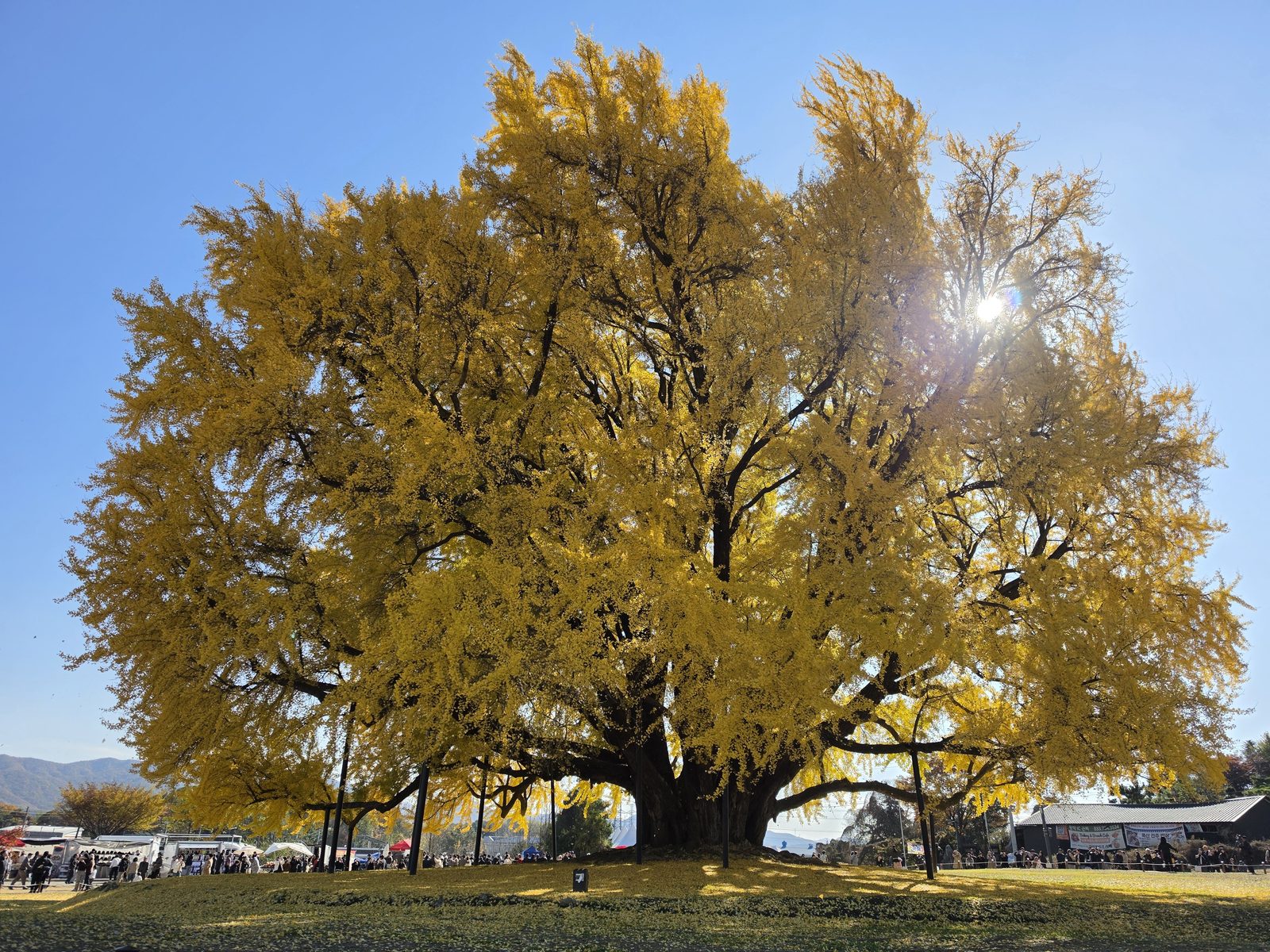
The Bangyeri ginkgo is more than 1,300 years old. On this Friday, it was immense, genuinely lemon-gold-orange, and surrounded by amplified trot, Christian praise music, and a flute.
It was still completely amazing.
The years are the point
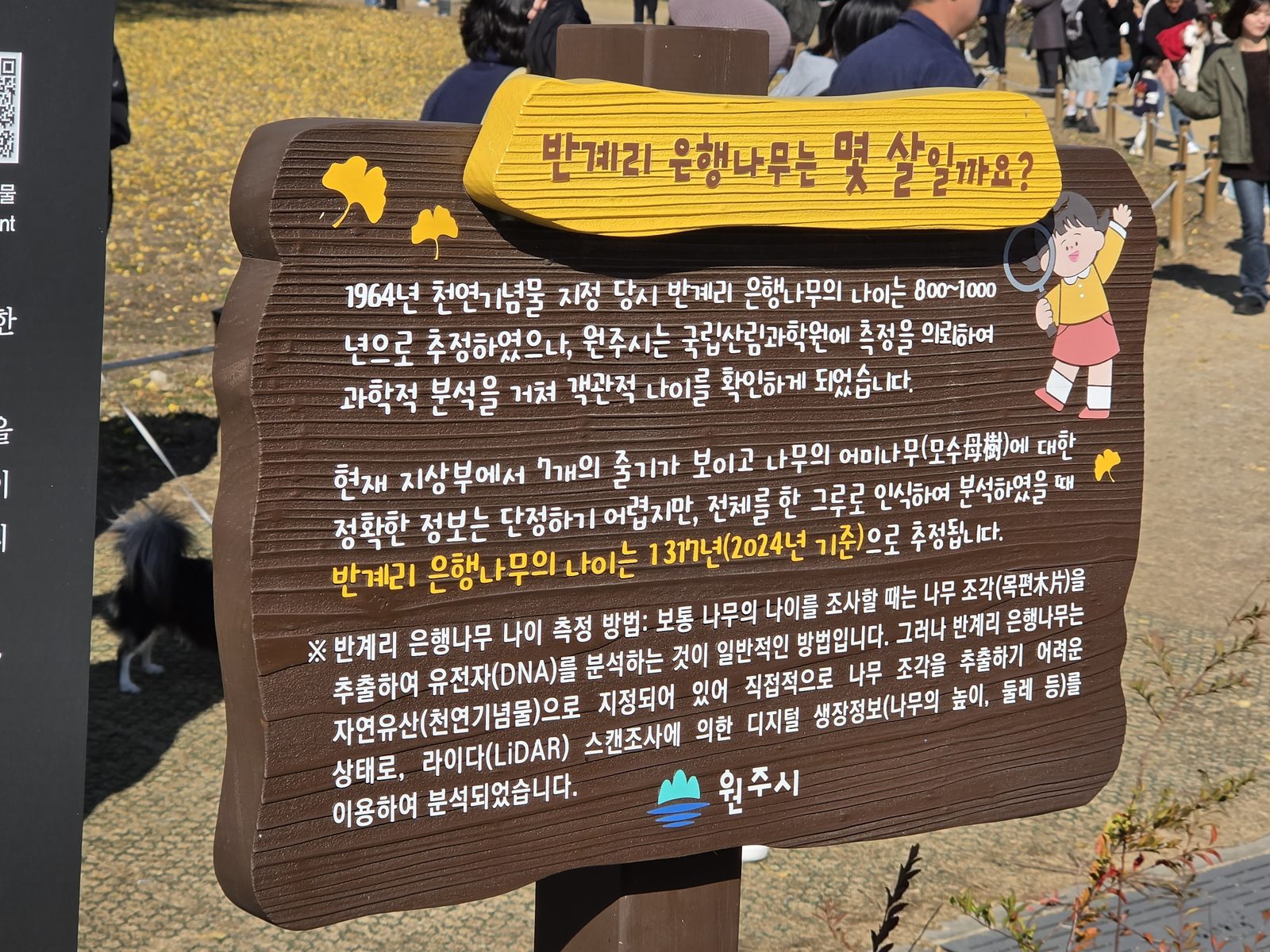
The formal name is Natural Monument 「원주 반계리 은행나무」, or Wonju Bangyeri Ginkgo. It was designated on January 31, 1964, when its age was estimated at 800–1,000 years.
Treating its seven aboveground stems as one tree, the National Institute of Forest Science used LiDAR and digital growth data to calculate an age of 1,317 years as of 2024.
In visitor terms: more than 1,300 years old. That is the reason to come.
Thirteen centuries become easier to grasp before this broad trunk and sky-filling canopy. Visitors reveal the scale; even a wide photograph struggles to contain it.
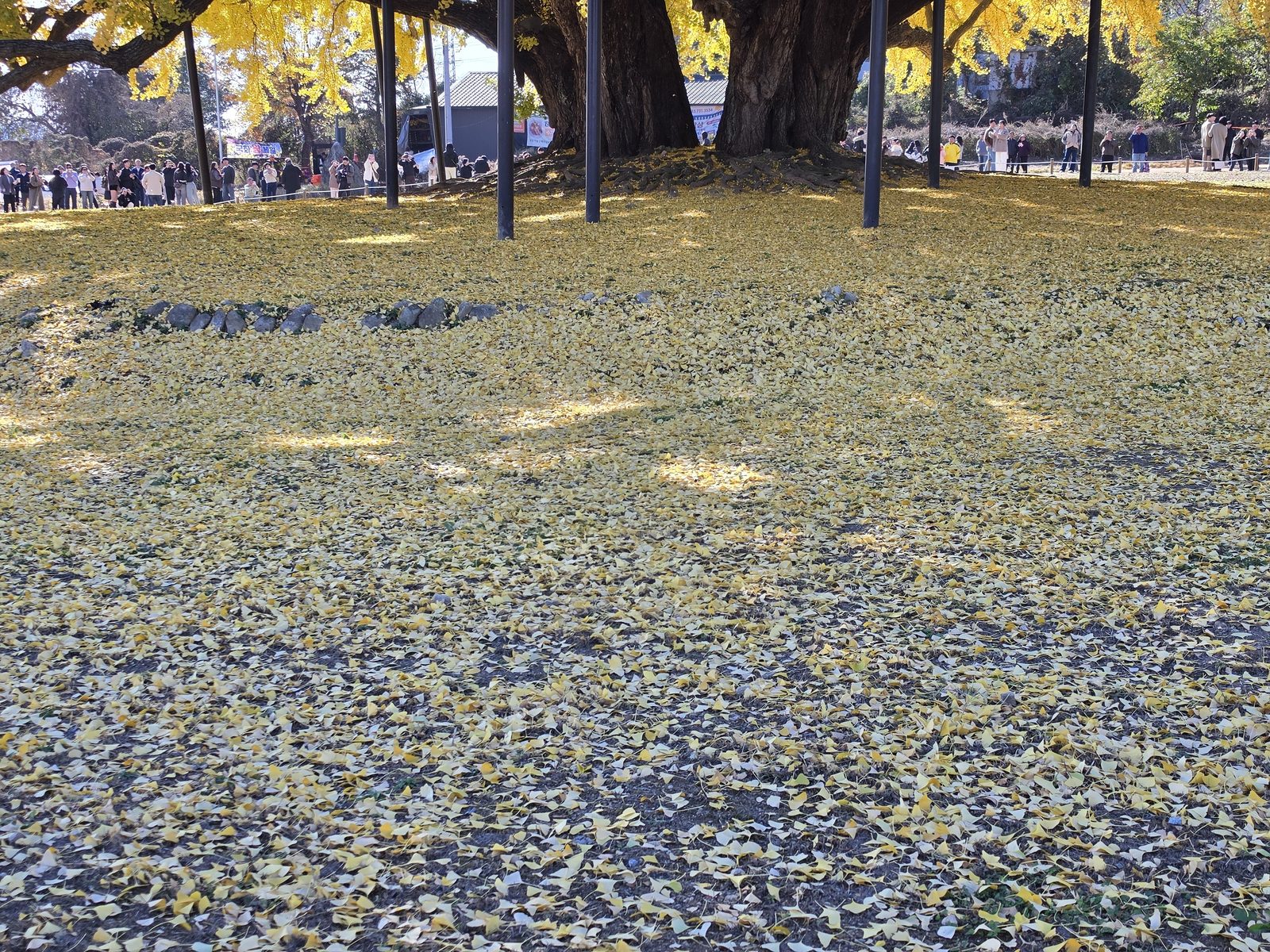
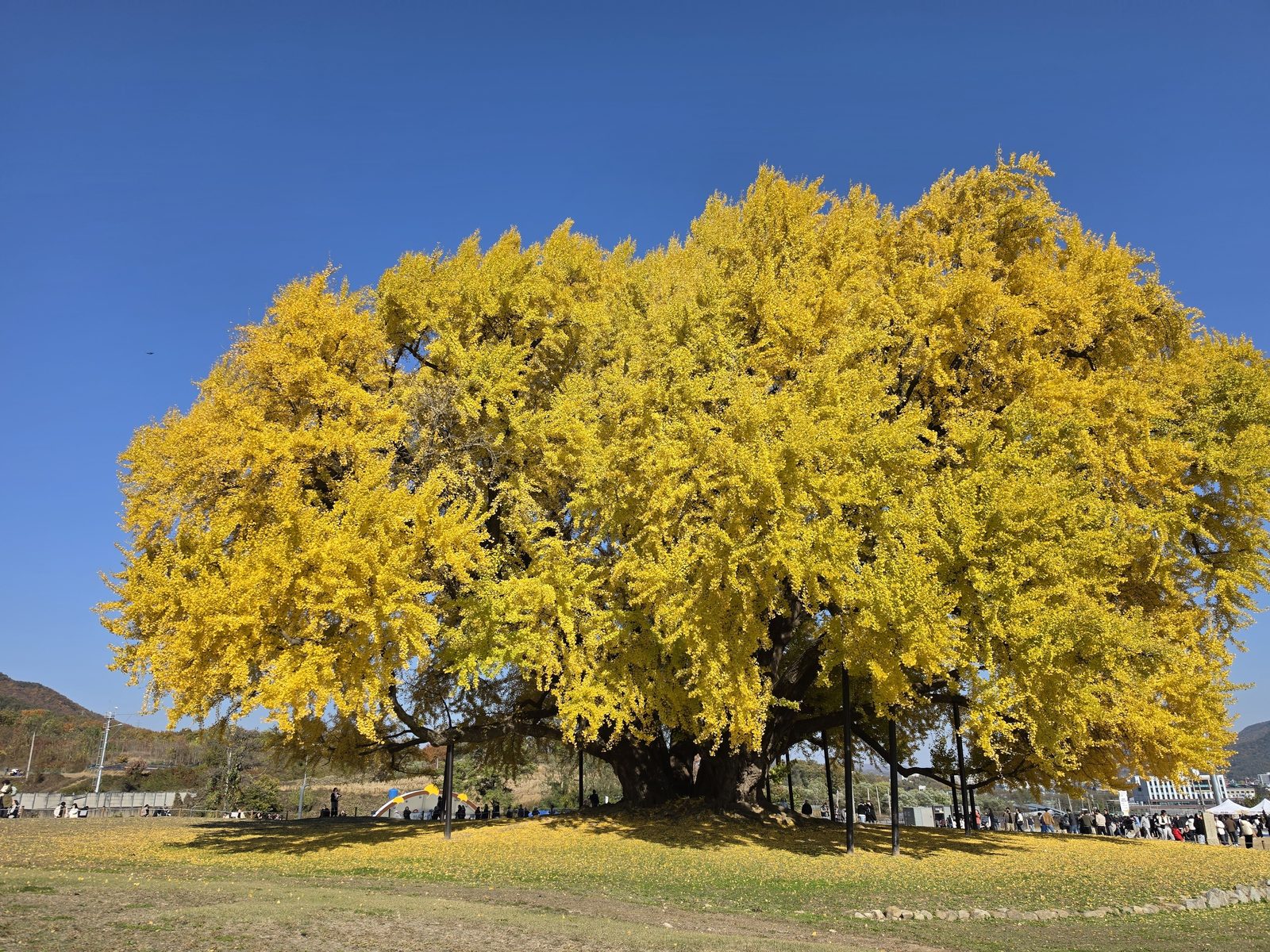
The foliage shifted from lemon to gold and orange. The photographs look intensely yellow because the tree really was intensely yellow.
Before visiting, I checked the Bangyeri ginkgo live feed operated by Wonju city through Wonju Media Live. The foliage appeared greener on camera than in person. The feed helped with color, but not crowds across the site.
You also see the people
By Friday lunchtime, Bangyeri was busy. Visitors circulated, photographed the tree, stared upward, and searched for another angle.
I dislike crowds yet came at peak color. That contradiction is mine.
But ordinary crowd noise was not the problem. Talking, walking, and trying to fit an enormous tree into a phone screen belong at a popular autumn site. People also give photographs scale; removing them would misrepresent the visit.
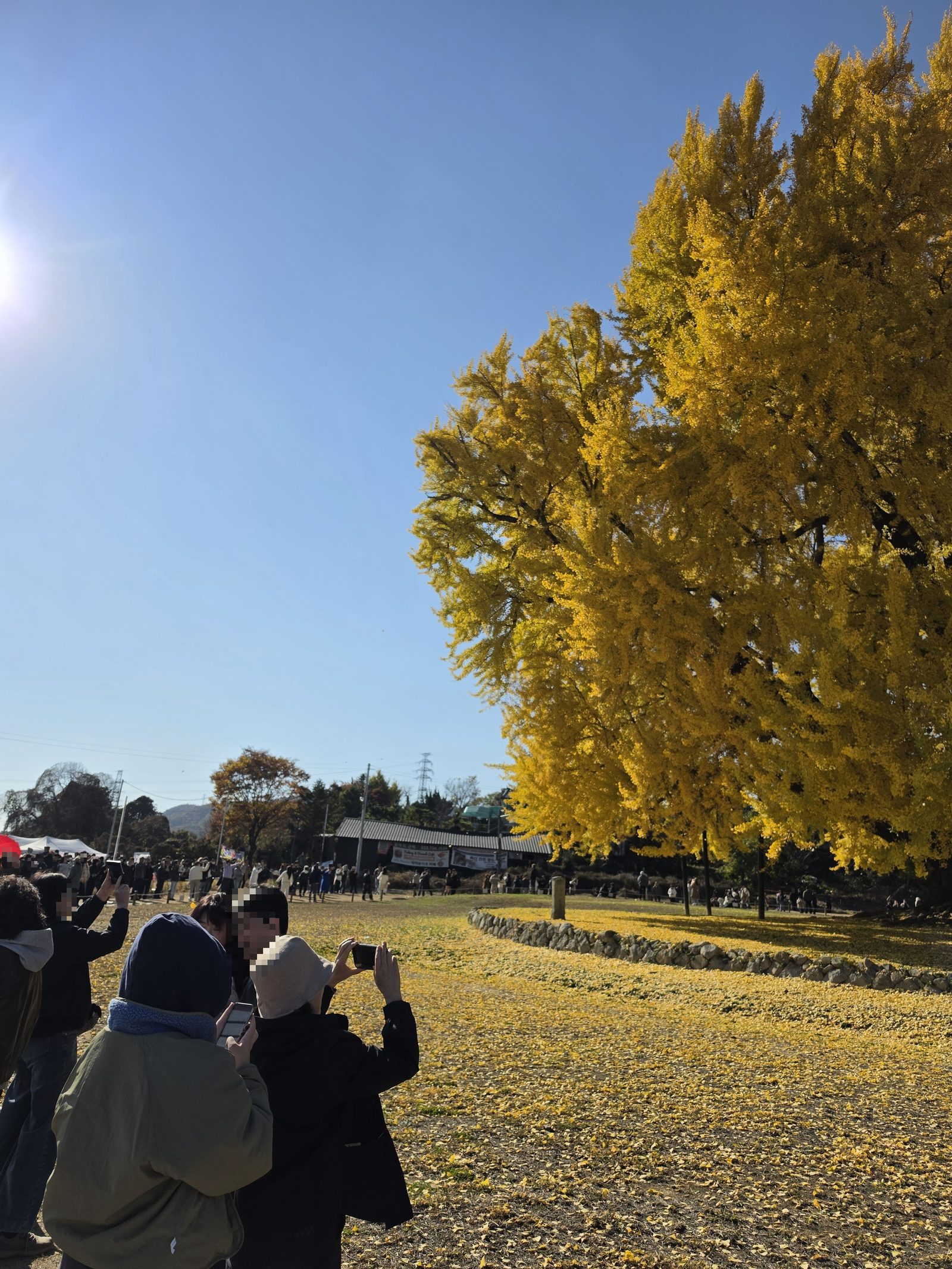
Many discussed food. Geumgangsan-do sikhugyeong (금강산도 식후경): even sightseeing at Geumgangsan comes after a meal. I had eaten, so I could concentrate on the tree.
Peddlers made the area feel like a nanjang (난장), a chaotic jumble fair. Crayon Shin-chan and Doraemon towels appeared among unrelated goods.
Still, the imposed sound bothered me most.
First, the chestnut trot
A roasted-chestnut vendor was playing loud trot and ppongjjak. I walked around the tree to escape it.
On the other side, someone was playing Christian praise music through a speaker while playing a flute.
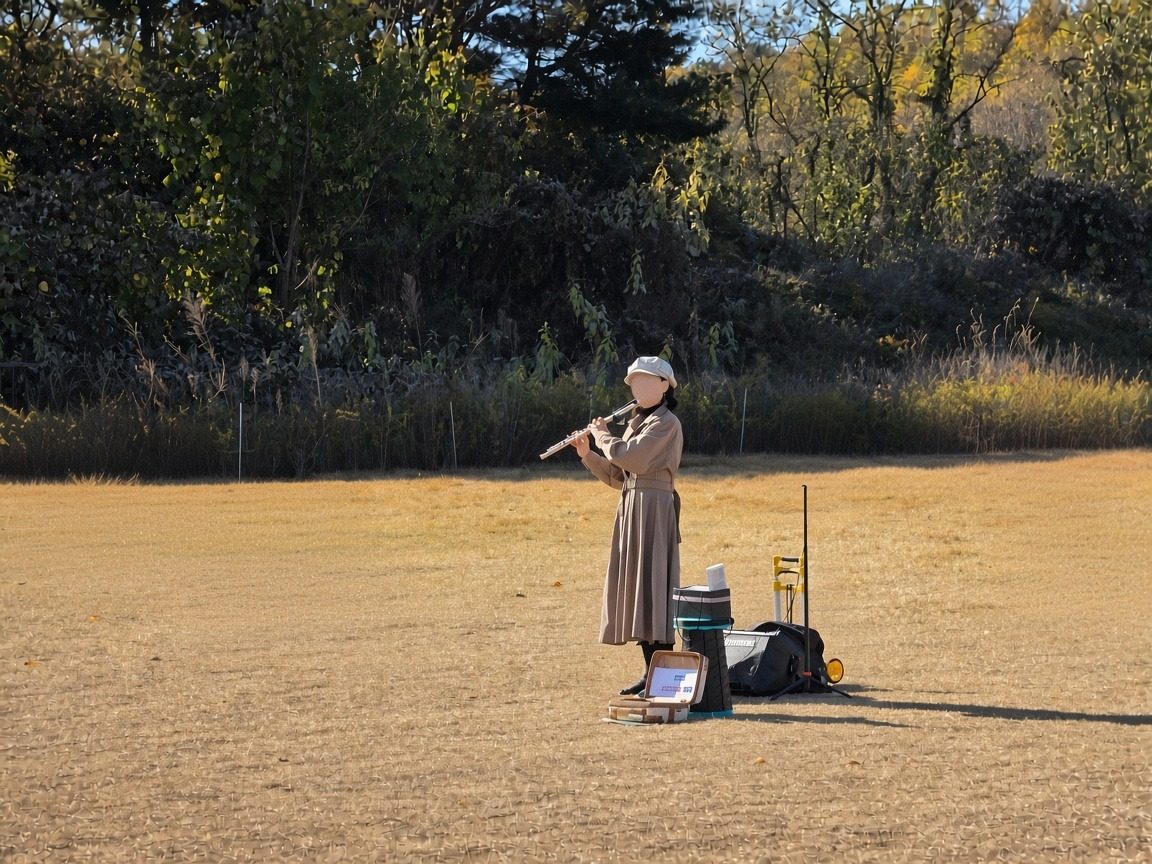
The issue was not Christianity, the flute, or normal visitor noise. Amplification was different: one person’s soundtrack carried across a shared public space, with no practical way to opt out.
Management personnel were present, but I did not see anyone stop the performance. It continued, and that made me angry.
This observation applies only to Friday, November 6, 2026. Bangyeri may be calmer on another day. That Friday lunchtime was not.
The tree remained extraordinary, but the noise changed the experience. Beauty and irritation occupied the same visit.
Should you go?
Yes, but choose your timing carefully.
If you need silence, an empty frame, or solitude, peak-color lunchtime is a poor bet. Friday was busy, with a long parking queue when I left.
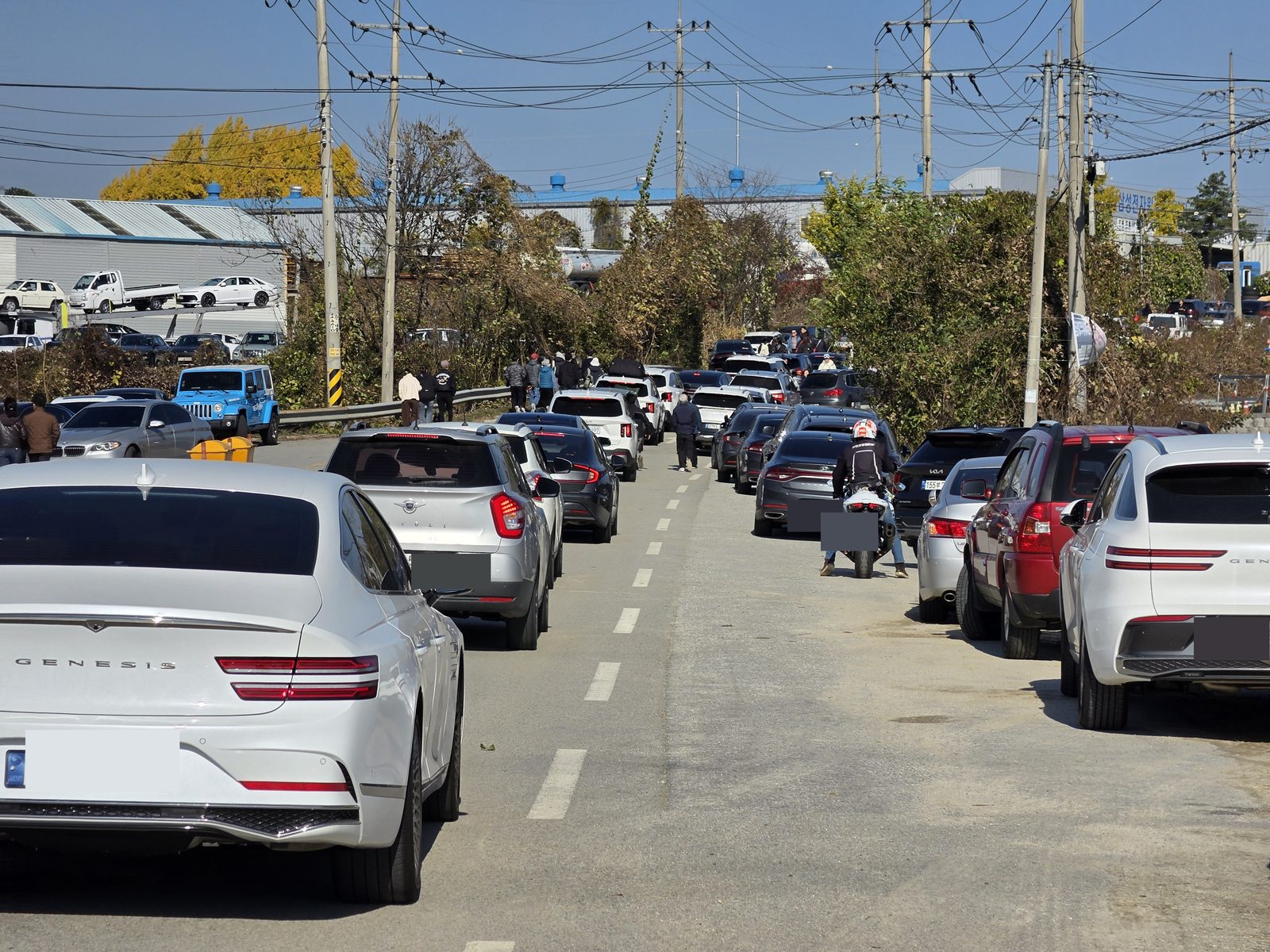
Access is difficult without your own car. Tourist buses and package tours are the realistic non-car options; Chinese group tours were present. A taxi can deliver you, but getting one back is basically impossible.
There is parking and there were guides, yet the site was packed Friday afternoon. I would avoid weekends and try a weekday morning before the main arrival wave.
Check the live camera for foliage and immediate conditions, remembering that it may look greener than reality and reveal little about crowds or parking.
Go for more than 1,300 years, the immense canopy, and the real lemon-gold-orange color. Bring realistic expectations about everything underneath.
Official info
Address: Gangwon-do, Wonju, Munmak-eup, Bangye-ri 1495-1 (강원특별자치도 원주시 문막읍 반계리 1495-1).
Bangyeri ginkgo live camera (Wonju Media Live)