Autumn
Ginkgo gold, a city wall and a quiet temple: an autumn walk from Hyehwa (혜화) to Gilsangsa (길상사)
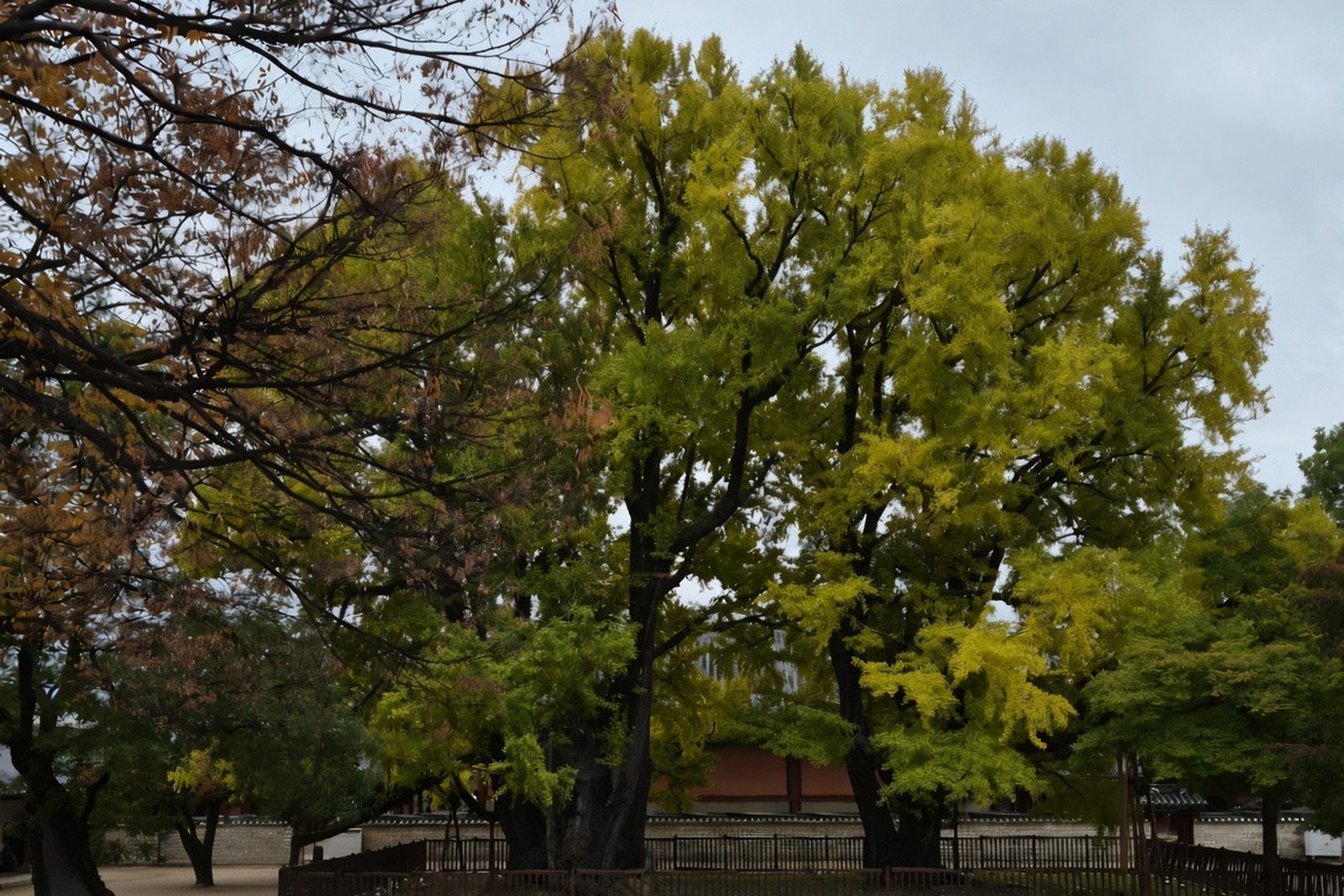
A friend recommended this route, and it holds up: small lanes, autumn color, a couple of good views and more history than you would expect from 3.5 km. It starts in the student noise of Daehak-ro (대학로) and ends at a temple where you are asked to whisper.
It is a neighborhood walk, not a hike. Pavement, village lanes and stone steps, two real climbs, and a bus never far away.
The route
All pins at once: Naver · Kakao · Google. Google has no walking directions in Korea, so use Naver Map (English mode) for turn-by-turn. Stop 4 (the wall path) has no pin — follow the road and your eyes. Per-stop links stay below.
1. Hyehwa Station (혜화역), Exit 4 Come up from Line 4 and walk towards Sungkyunkwan University (성균관대학교). You only pass through Daehak-ro, which is plenty. Next: about 10–15 min. Naver | Kakao | Google
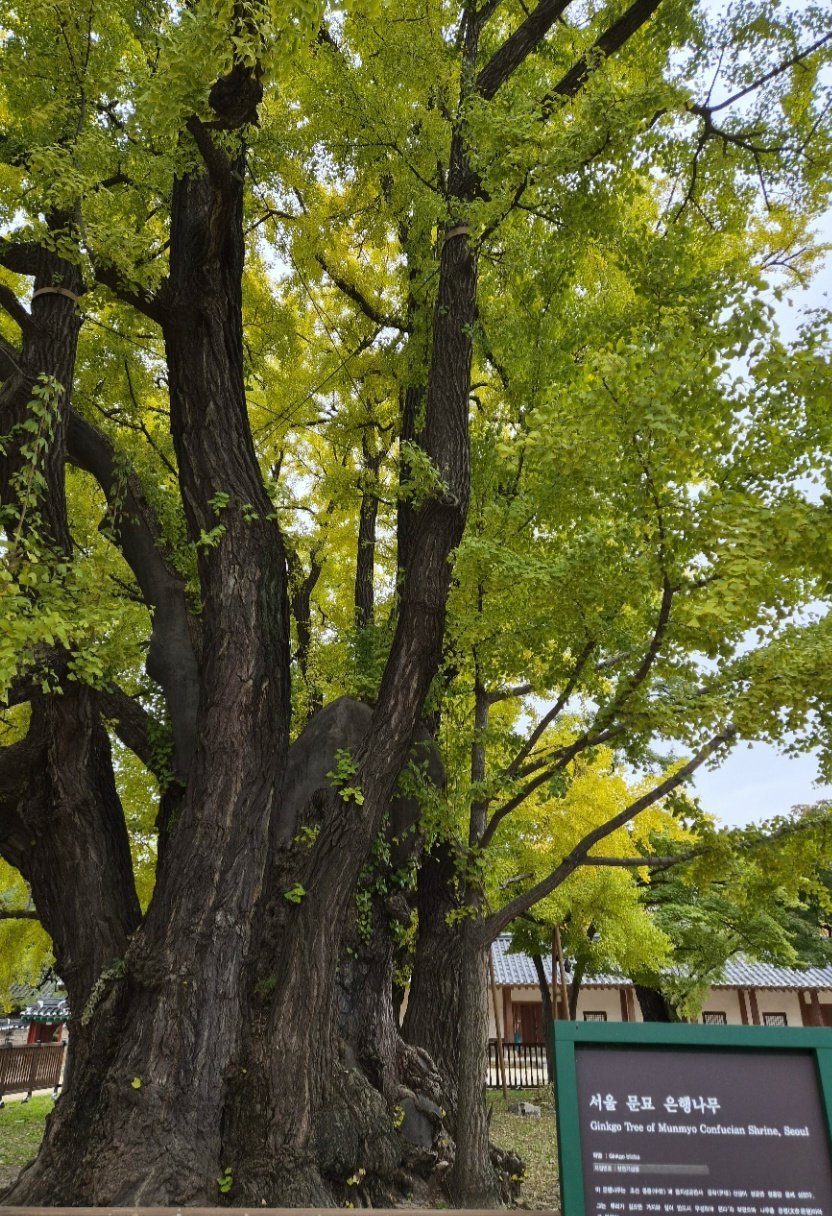
2. Myeongnyundang (명륜당) The old Confucian academy inside the university's front gate. The bigger of its two ginkgo trees is a Natural Monument (천연기념물), said to be planted in 1519, and goes gold in early November. Free, 09:00–17:00 from November to February. More on the two ginkgo trees here. Next: about 15–20 min, uphill. Naver | Kakao | Google
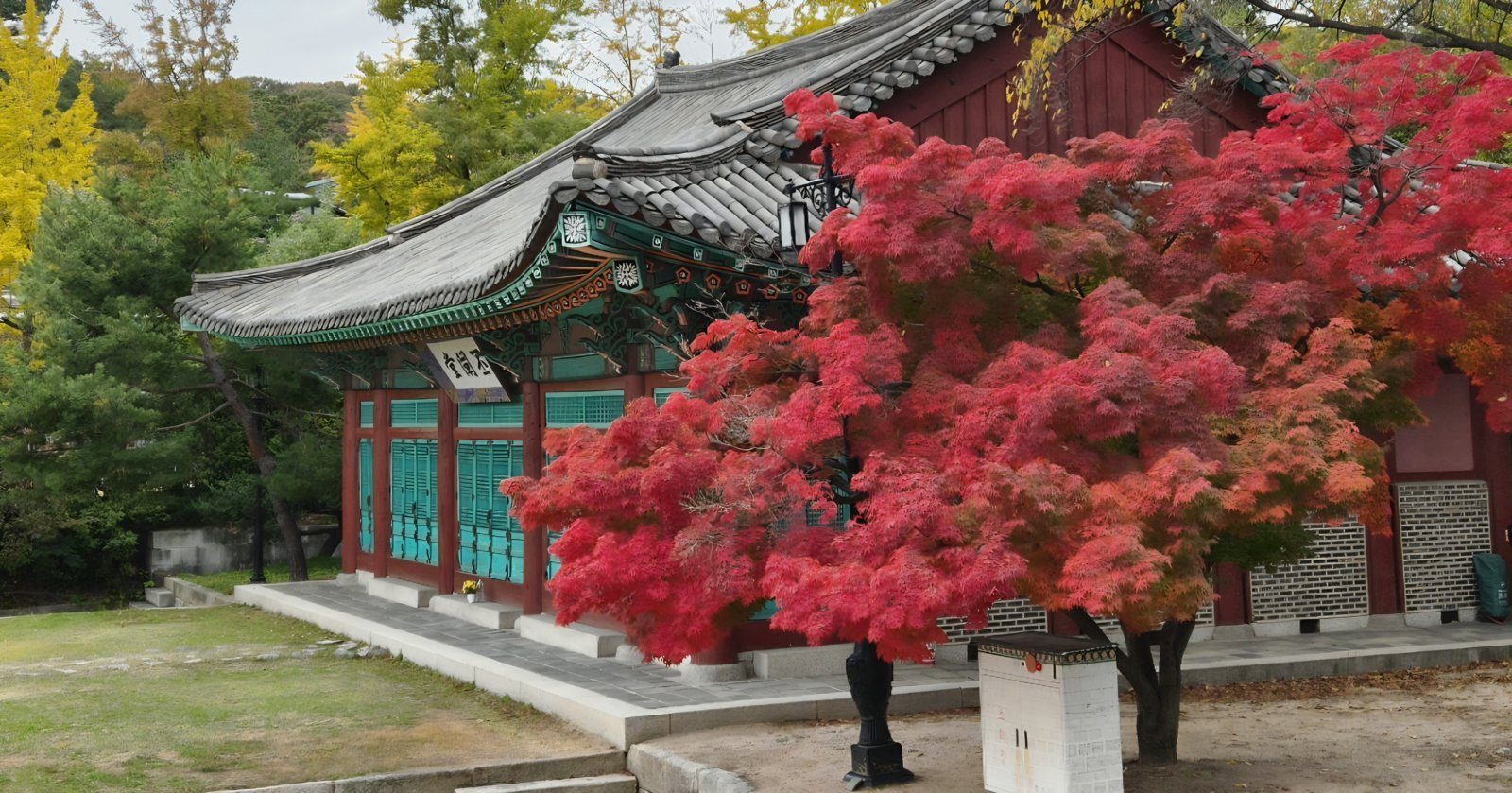
3. Waryong Park (와룡공원) Head up behind the campus and follow the signs. This is the main climb. The park runs along the city wall, and its cherry and maple trees go red in autumn. Next: the wall path starts here. Naver | Kakao | Google
4. The wall path, inner side (한양도성 성곽길), about 400 m Walk along the inside of the Seoul City Wall (서울 한양도성), a short piece of the official Baegak (백악) section. Look over the parapet at the rooftops of Seongbuk-dong (성북동). It is a path, not a place, so there is no pin. Follow the signs for Bukjeong Village (북정마을). Next: about 5–10 min.
5. Bukjeong Village (북정마을), through the hidden gate (암문) A small gate in the wall, an amun (암문, "hidden gate"), lets you out to the Seongbuk-dong side. Bukjeong Village sits right under the wall: small houses, steep steps. People live here, so keep your voice down and your camera off their doorsteps. Next: about 5 min, downhill. Naver | Kakao | Google
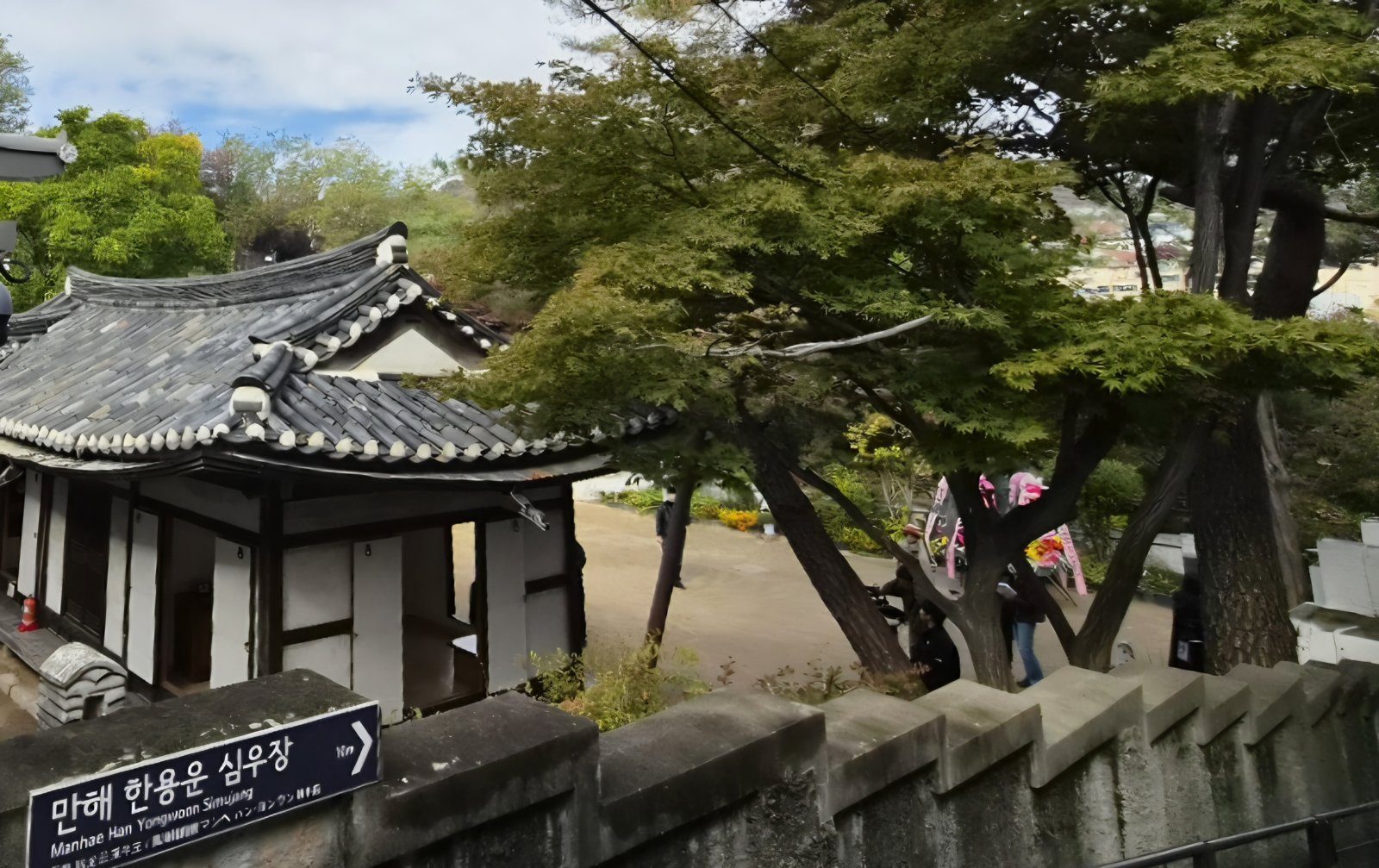
6. Simujang (심우장) The house where the poet and independence activist Han Yong-un (한용운) lived from 1933 until he died in 1944. He had it built facing north, the wrong way by Korean standards, so he would not have to face the Japanese Government-General building. Free, 09:00–18:00, every day. Next: about 20–25 min, down to Seongbuk-ro (성북로) and gently uphill again. Naver | Kakao | Google
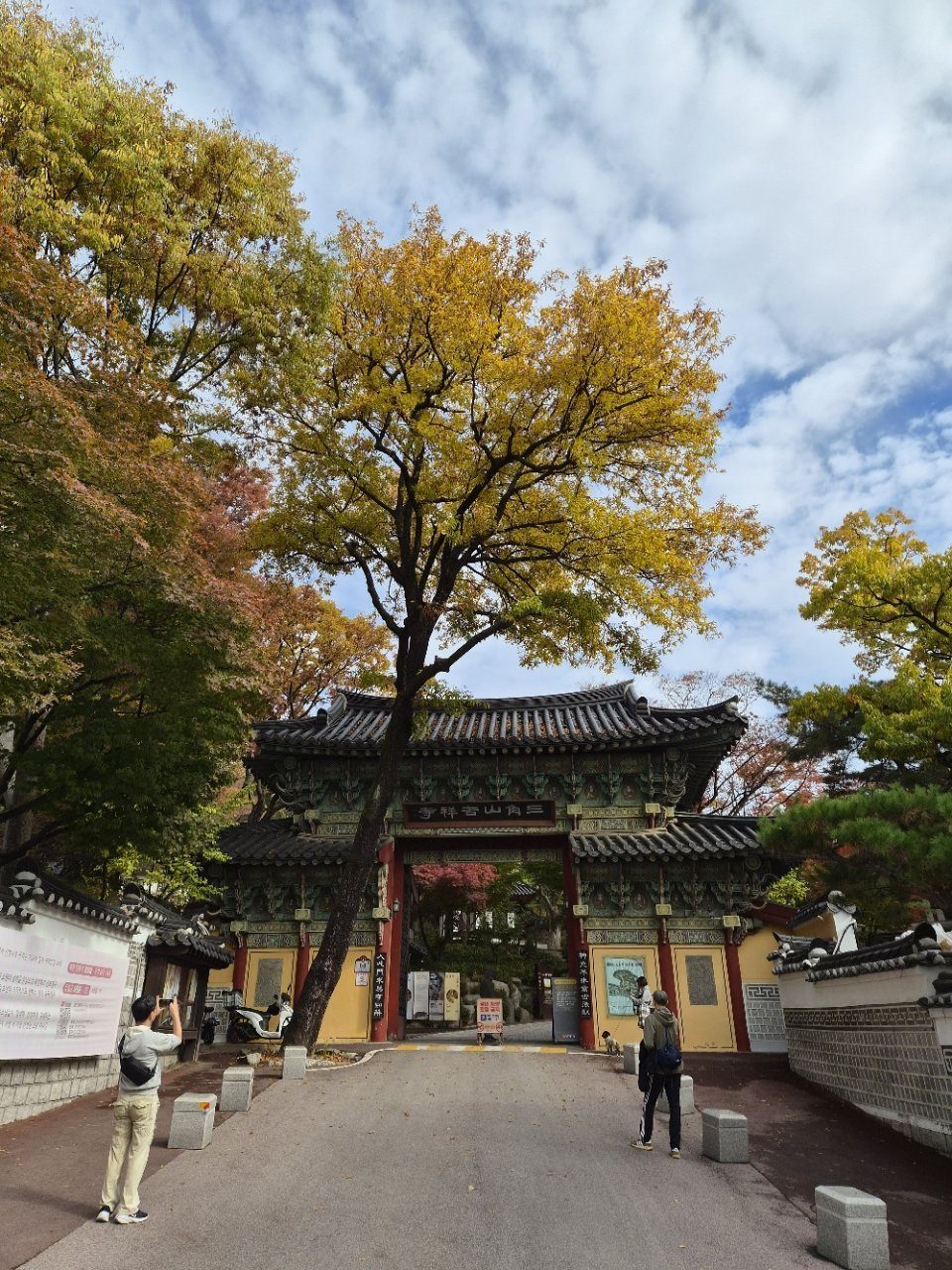
7. Gilsangsa (길상사) Until the 1990s this was Daewongak (대원각), an expensive restaurant. Its owner spent about ten years trying to give it to the monk Beopjeong (법정) after reading his book Non-possession (무소유). He finally said yes, and it became a temple in 1997 (the temple's own account). Visit Korea lists it as open 09:00–18:00, free. It is a working temple: talk quietly, and photograph the buildings, not the people praying. End of the walk. Naver | Kakao | Google
If your legs give out on the way up from Seongbuk-ro, village bus Seongbuk 02 (성북02) also runs to the Gilsangsa stop (길상사).
When to go
Early November, for the ginkgo and the maples. Ginkgo drops its leaves fast once it turns, so this week beats "sometime."
The timing below comes from Seoul's public data (real-time city data for the Hyehwa Station area, Seoul Metro exits at Hyehwa, and hourly population figures for Seongbuk-dong), not from a hunch:
- Weekdays: start at Hyehwa around 12:30. The late-morning crowd at Myeongnyundang is leaving, and Seongbuk-dong is at its quietest in mid-afternoon.
- Weekends: start by 10:00. Weekend afternoons at Hyehwa run about twice the weekday numbers.
Peak ginkgo weekends are busier than any of this. Nothing on the route closes on Mondays.
Getting back
- Bus: Seongbuk 02 (성북02) from the Gilsangsa stop (길상사) down to Hansung University Station (한성대입구역, Line 4).
- Walk: about 25 minutes downhill to the same station.
- Taxi: around 5,000 won to Hansung University Station. Kakao T (카카오 T) accepts foreign cards registered in your own name, and Uber also works in Seoul. Set the pickup to 길상사 and wait by the gate.
Official info
Seoul City Wall (서울 한양도성) · Gilsangsa (길상사) · Simujang (심우장), Seongbuk-gu (성북구) · Myeongnyundang (명륜당), Visit Seoul